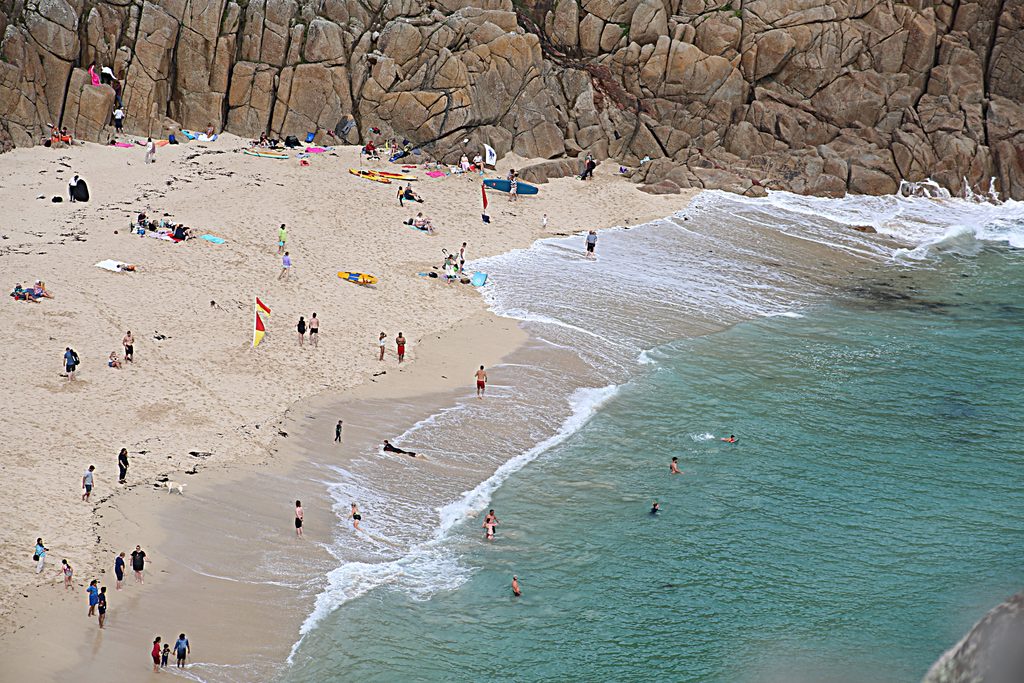
Discover some of Britain’s best road trips, from dramatic coastal roads and mountain passes to peaceful countryside routes. Each journey includes places to stop, things to see and photography opportunities along the way.
Featured Road Trips
From Scotland’s dramatic Highlands to the winding roads of Wales and England’s beautiful coast and countryside, these routes are about enjoying the journey as much as the destination.
The Scottish Highlands
A journey through the Scottish Highlands is about far more than simply getting from one place to another. Dramatic mountains, peaceful lochs, historic castles and winding roads make this one of Britain’s great areas for a road trip.
Our journey begins around Helensburgh, on the Firth of Clyde, before heading north towards Loch Lomond and the increasingly dramatic scenery of the Highlands.
Helensburgh – Gateway to the Highlands
Helensburgh makes a natural starting point for our journey north. Sitting on the Firth of Clyde, the town provides a gentle introduction before the road turns towards Loch Lomond and the mountains beyond.
Before heading north, Helensburgh itself is worth exploring. Its position on the Clyde gives the town a strong maritime character, while the waterfront provides views across the estuary and a pleasant starting point for the journey.
Loch Lomond – Into the Highlands
Leaving Helensburgh behind, the road turns towards Loch Lomond, where the landscape begins to change dramatically. The loch stretches north between wooded hills and increasingly rugged mountains, offering magnificent views and plenty of places to stop along the way.
Luss – A Village on Loch Lomond
Luss is one of the most attractive villages on the shores of Loch Lomond and makes an ideal first stop on the journey north. Its pretty cottages, narrow streets and lochside setting make it a pleasant place to explore, while the views across the water provide excellent opportunities for photography.
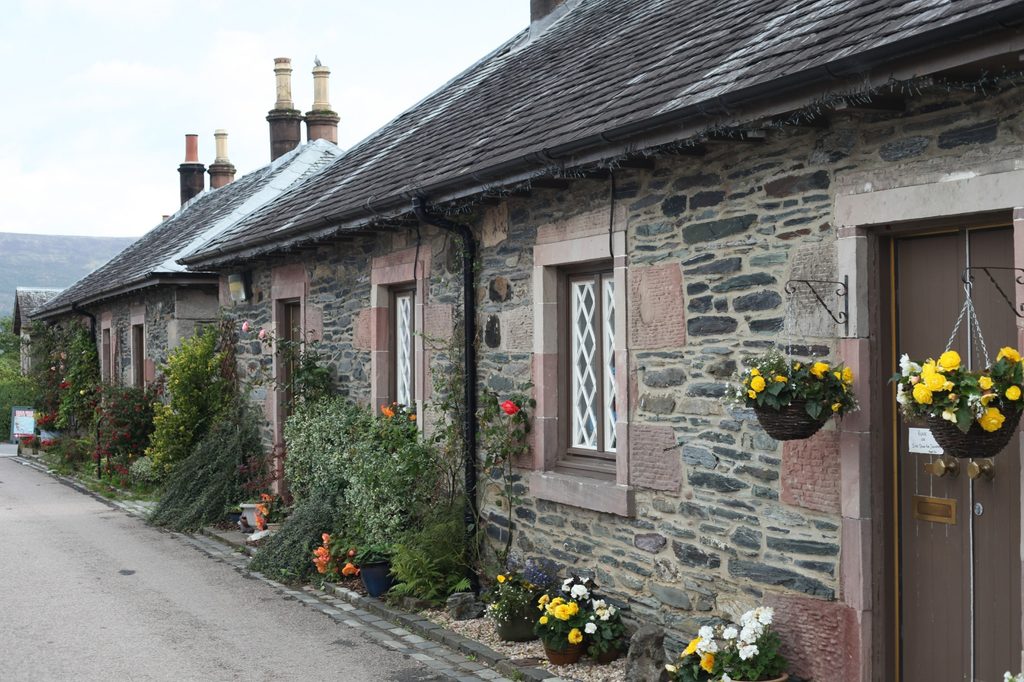
Traditional stone cottages in Luss, on the shores of Loch Lomond. Photograph: MKD
Falls of Falloch – A Highland Waterfall
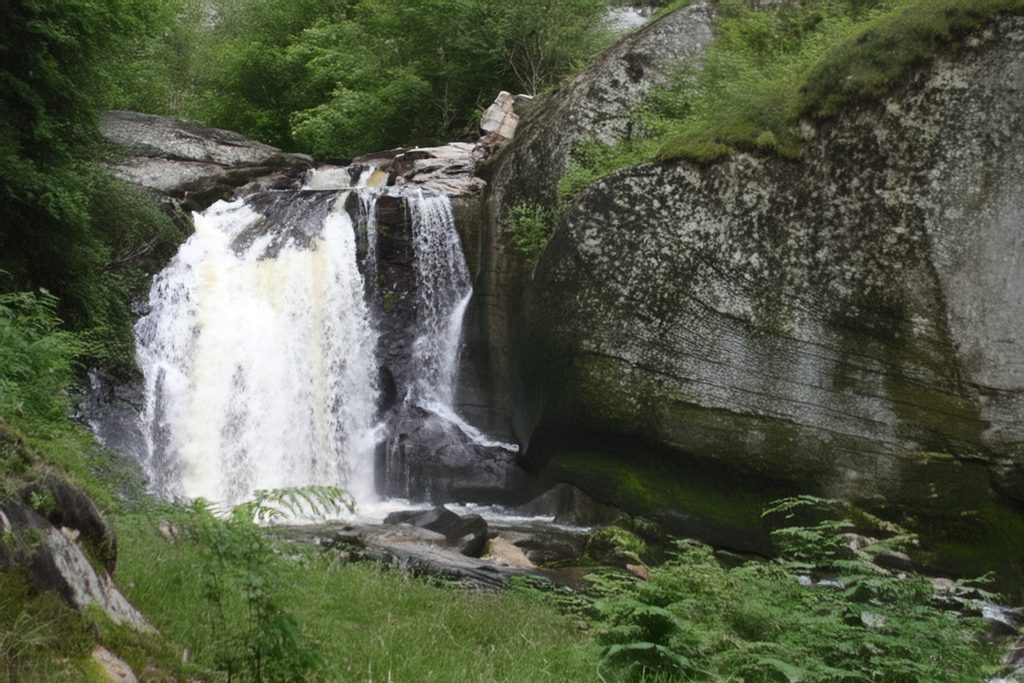
Leaving Loch Lomond behind and continuing north, the Falls of Falloch make a worthwhile stop before reaching Crianlarich. Surrounded by woodland, the River Falloch tumbles dramatically over the rocks, giving a first taste of the wilder Highland scenery that lies ahead.
Crianlarich, Tyndrum and Bridge of Orchy – The Road North
From Crianlarich the road continues north through Tyndrum and on towards Bridge of Orchy. These small Highland settlements are useful stopping points along the way, but for us the real attraction lies ahead, as the landscape opens out and the road begins its spectacular crossing of Rannoch Moor.
Rannoch Moor – Into the Wild Highlands
Beyond Bridge of Orchy, the character of the journey changes dramatically as the A82 climbs onto Rannoch Moor. Vast, open and remarkably wild, the moor is a landscape of mountains, lochs and peatland, with the road cutting through scenery that can look completely different as the Highland weather changes.
Kingshouse – Deer on the Moor
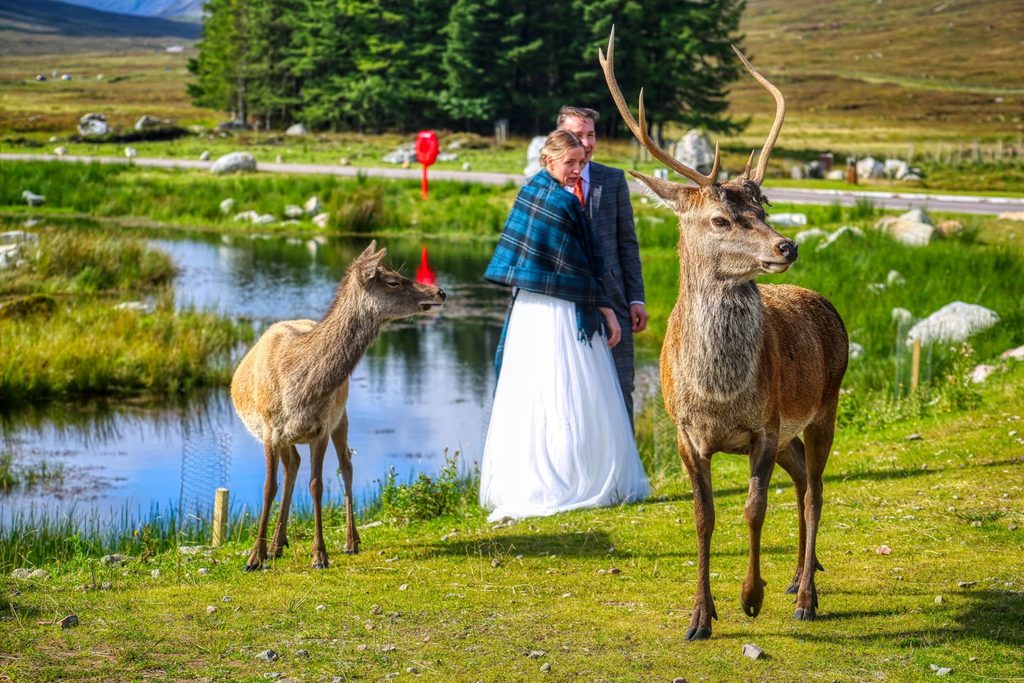
Continuing across the moor brings us to Kingshouse, in one of the most dramatic settings on this journey. Red deer are frequent visitors to the area, sometimes appearing remarkably unconcerned by the people around them. On one visit, I came across a wedding couple having their photographs taken beside the hotel – with two of the local deer apparently deciding that they should be part of the occasion too.
Glencoe – Through the Heart of the Highlands
From Kingshouse the A82 continues towards Glencoe, passing through one of the most dramatic landscapes in Scotland. Mountains rise steeply on either side of the road as it winds through the glen, and almost every bend seems to reveal another view worth stopping for. This is not simply somewhere I have driven through – I have also stayed in Glencoe village, giving me the opportunity to explore the area at a much more leisurely pace
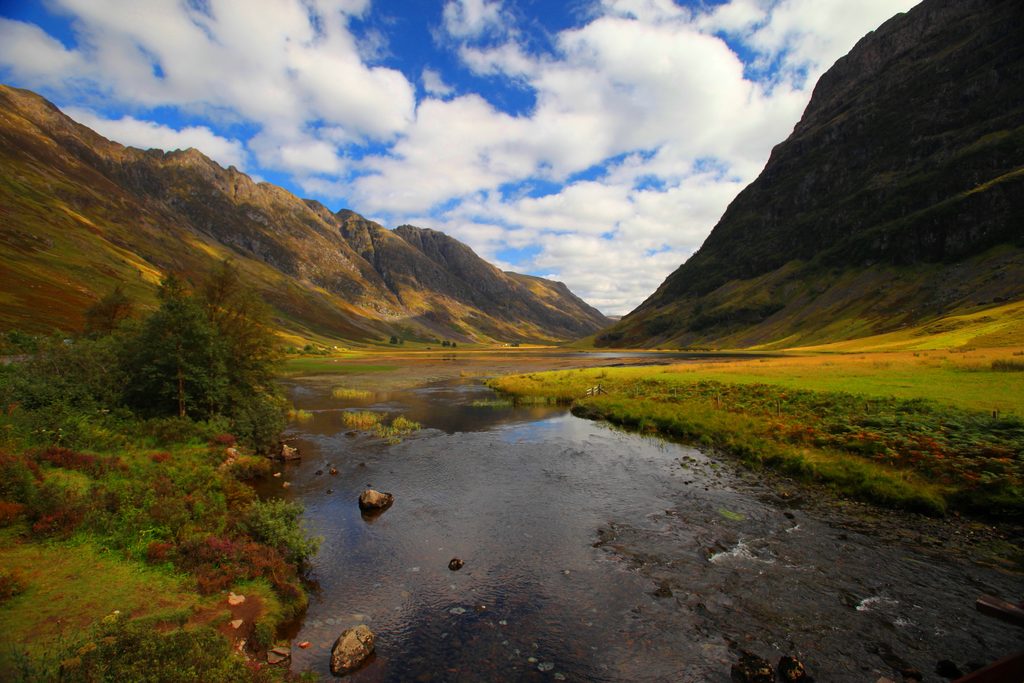
Glencoe Village – Beneath the Mountains
After travelling through the dramatic Pass of Glen Coe, I spent time staying in Glencoe village itself. Surrounded by mountains, the village has a completely different atmosphere from simply driving through the glen. Staying here gave me time to wander around, discover some of its history and enjoy the remarkable Highland scenery from a much more leisurely perspective.
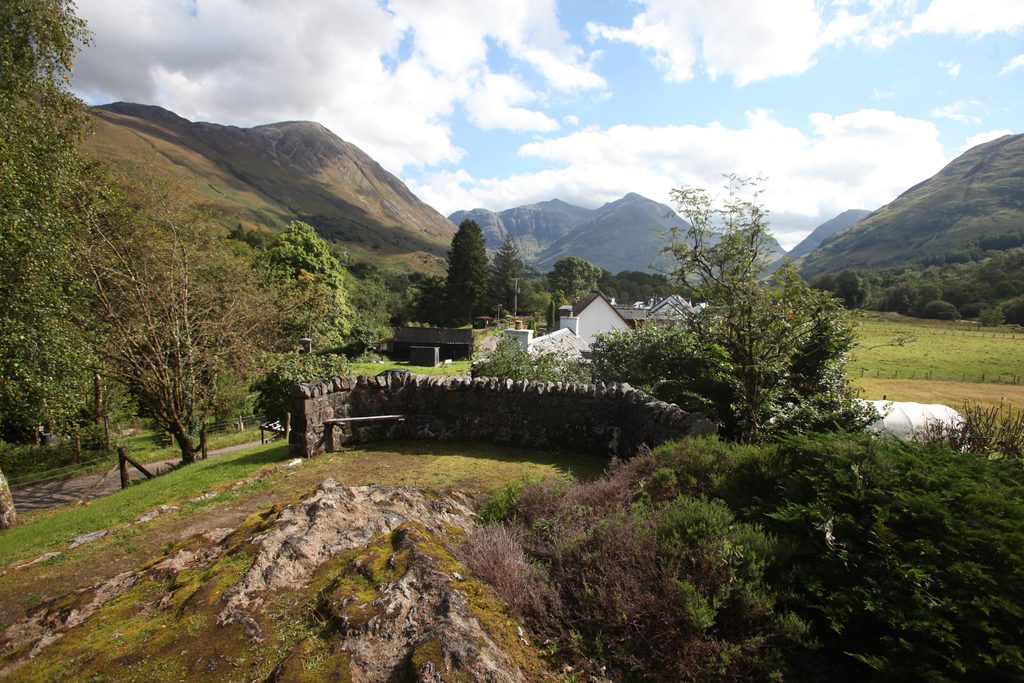
The Glencoe Massacre Memorial
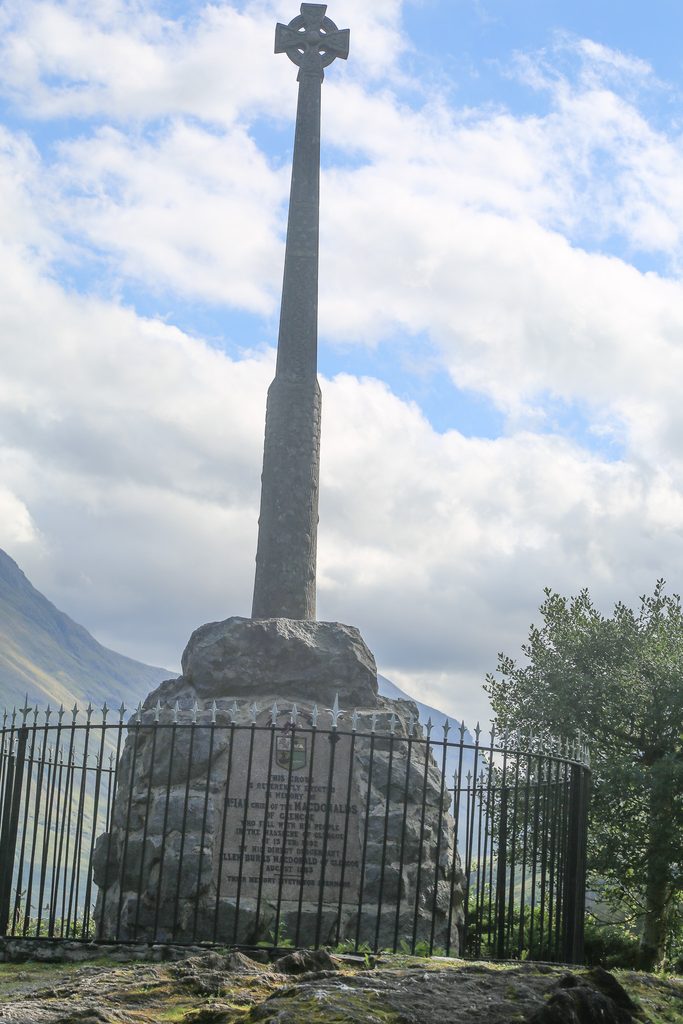
Just a short distance from where I was staying stands the Glencoe Massacre Memorial, a reminder of one of the darkest episodes in the glen’s history. On 13 February 1692, members of the MacDonald clan were killed by government forces following a period in which the soldiers had been given hospitality in the glen. The memorial was erected in 1883 in memory of McIan, Chief of the MacDonalds of Glencoe, and his people. My cottage was only two cottages away from the memorial, making this historic place very much part of my surroundings during my stay.
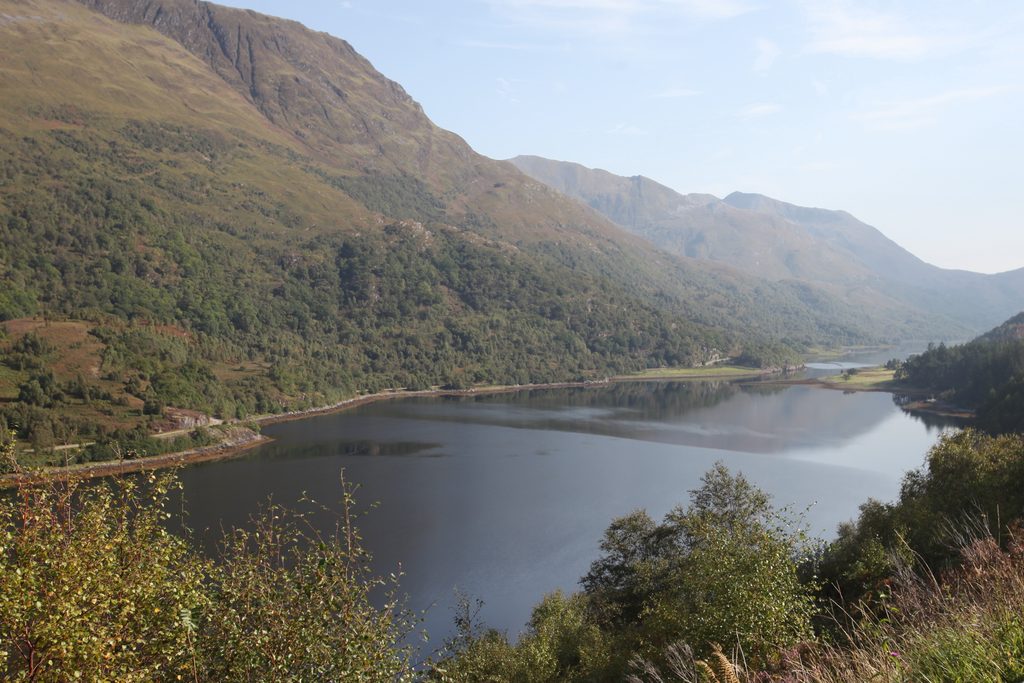
Loch Leven – Around the Water’s Edge
Leaving Glencoe, I have often continued around the shores of Loch Leven towards Kinlochleven. The road follows the loch beneath steep Highland mountains, with changing views across the water at almost every turn. As the family driver, however, I have often had to admire those views from behind the wheel rather than through the camera — making the opportunities to stop and take a photograph all the more welcome.
Kinlochleven – An Unexpected Sign
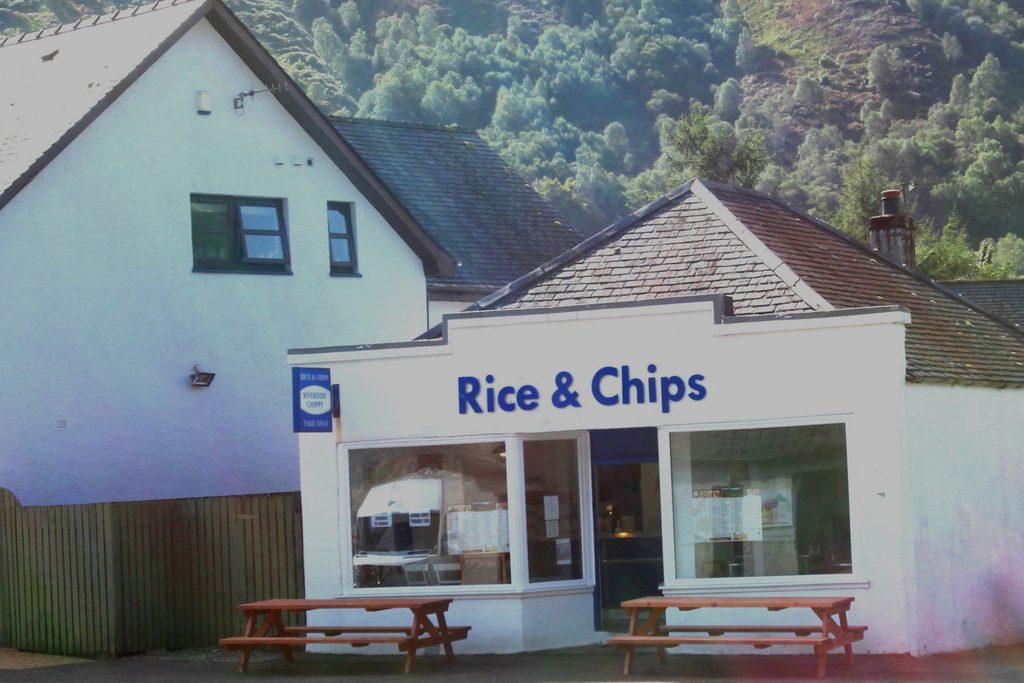
Not every memorable sight on a road trip has to be a mountain or a loch. Passing through Kinlochleven, one particular shop sign caught my attention. Among all the magnificent Highland scenery, the wonderfully straightforward name “Rice & Chips” made me smile — and naturally, I had to take a photograph.
Ballachulish – From Loch Leven to Loch Linnhe
Returning from Kinlochleven, the journey brings me back towards Ballachulish, where Loch Leven meets the much larger Loch Linnhe. Crossing the Ballachulish Bridge marks another change in the journey, leaving the enclosed scenery around Loch Leven behind as the landscape opens out towards Fort William and the western Highlands.Welshpool to the Welsh Coast
Welshpool to the Welsh Coast
Welshpool – Where the Welsh Journey Begins
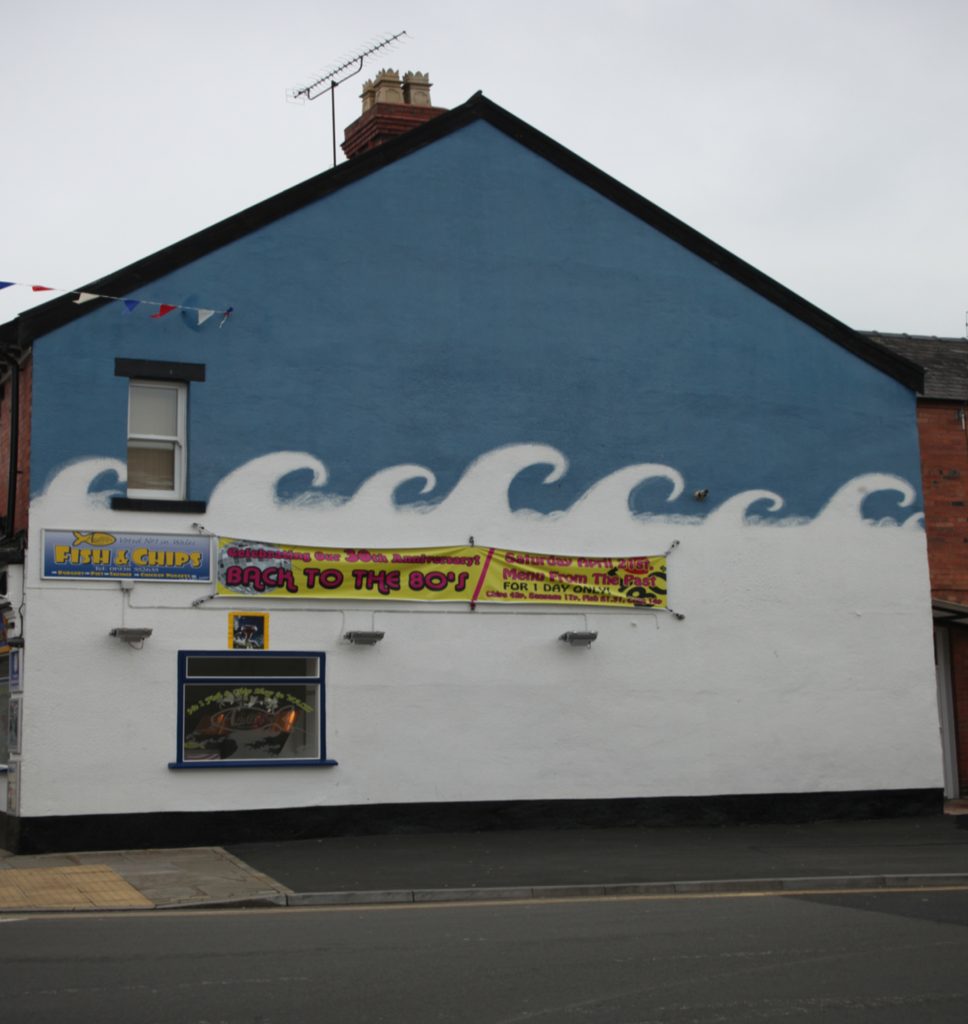
Welshpool makes a natural starting point for my journey across Wales. It is a town I have passed through many times, but rather than simply continuing west, there is always a temptation to stop and explore. For me, one of the main attractions is the Welshpool & Llanfair Light Railway, where a journey through the Mid Wales countryside provides a very different way of seeing the landscape.
Welshpool & Llanfair Light Railway
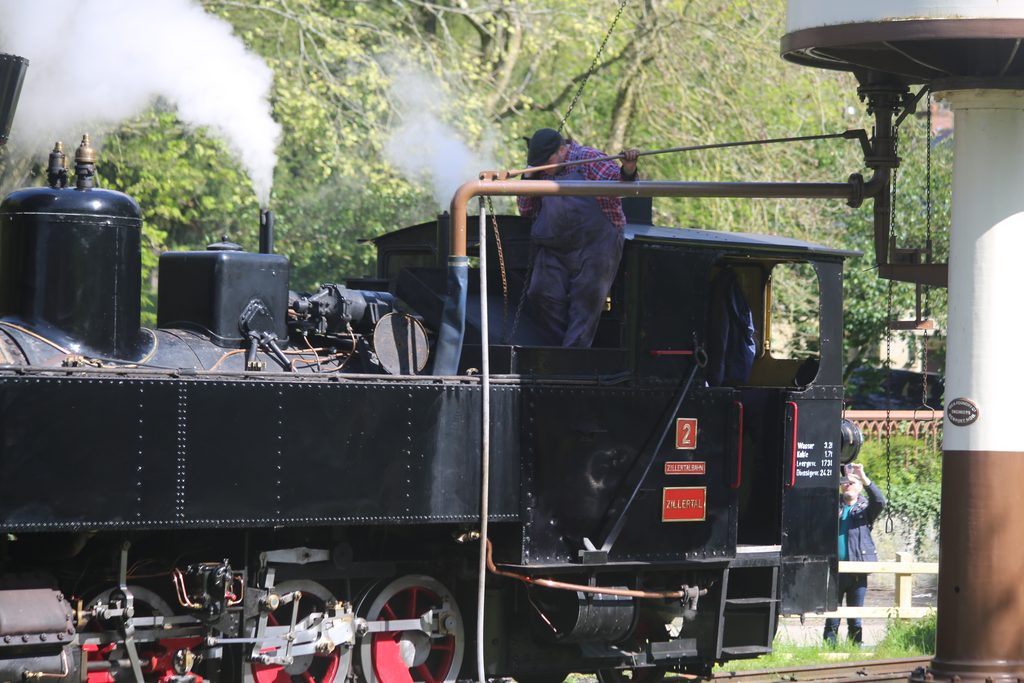
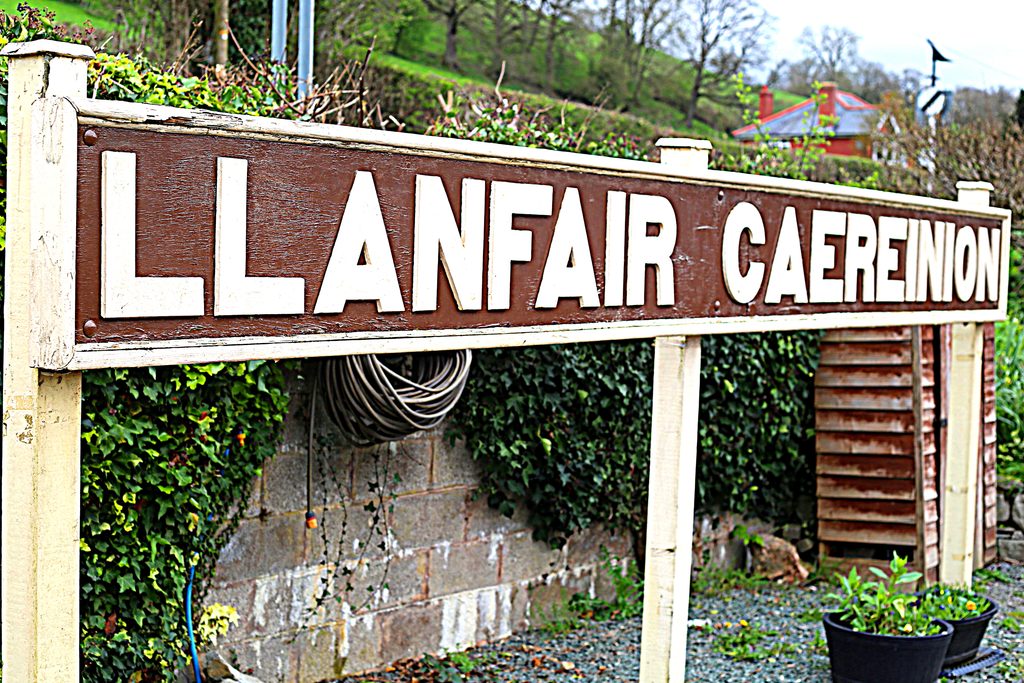
From Welshpool, the Welshpool & Llanfair Light Railway provides a fascinating change of pace. This narrow-gauge heritage railway winds for around eight miles through the Mid Wales countryside to Llanfair Caereinion. For me, however, much of the attraction is not simply the journey itself, but watching the locomotives being prepared and worked by the railway’s crews.
Along the Line to Llanfair Caereinion
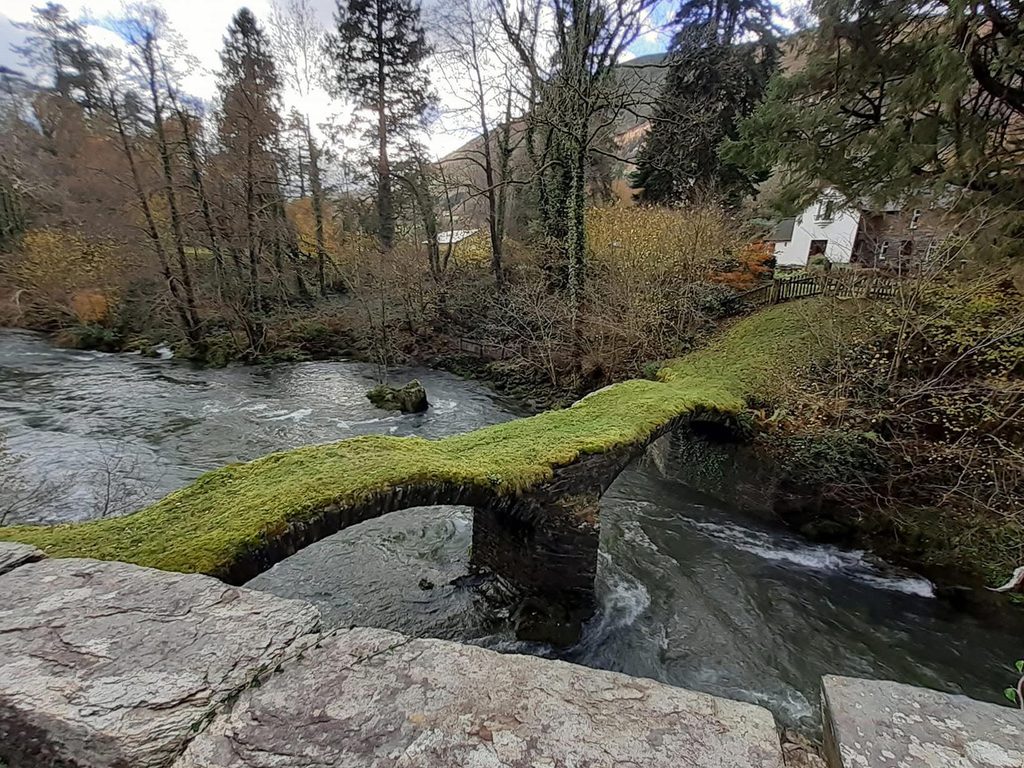
Mallwyd – The Old Packhorse BrIdge
Machynlleth – Gateway to the Coast
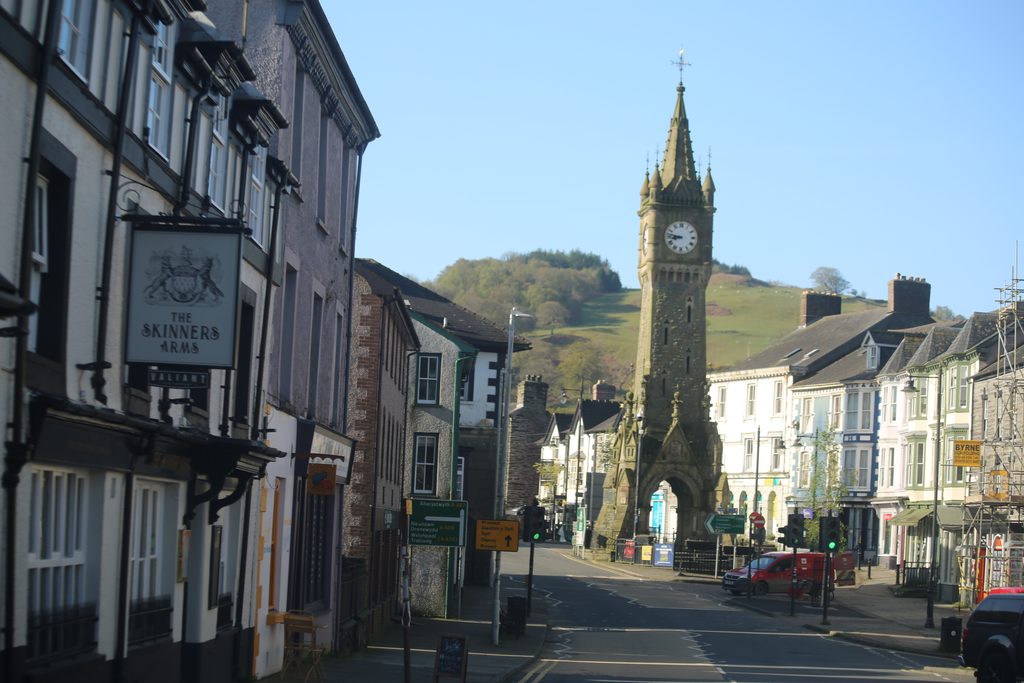
From Mallwyd the journey continues south towards Machynlleth, an attractive market town surrounded by the hills of Mid Wales. Its distinctive clock tower makes an unmistakable landmark in the centre of town, while the road signs provide a reminder that the coast and Aberystwyth now lie ahead. For me, Machynlleth marks the point where this journey begins to leave the inland valleys behind and turn towards Cardigan Bay.
Bwlch Nant yr Arian – Red Kites Over Mid Wales
From Machynlleth, the journey continues into the hills of Mid Wales towards Bwlch Nant yr Arian. The area is particularly well known for its red kites, and watching these magnificent birds circling overhead provides a very different photographic opportunity from the landscapes and historic places along the route. Photographing them in flight is not always easy, but seeing their distinctive forked tails against the open sky makes the effort worthwhile.
Coed Rheidol – Waterfalls in the Woods
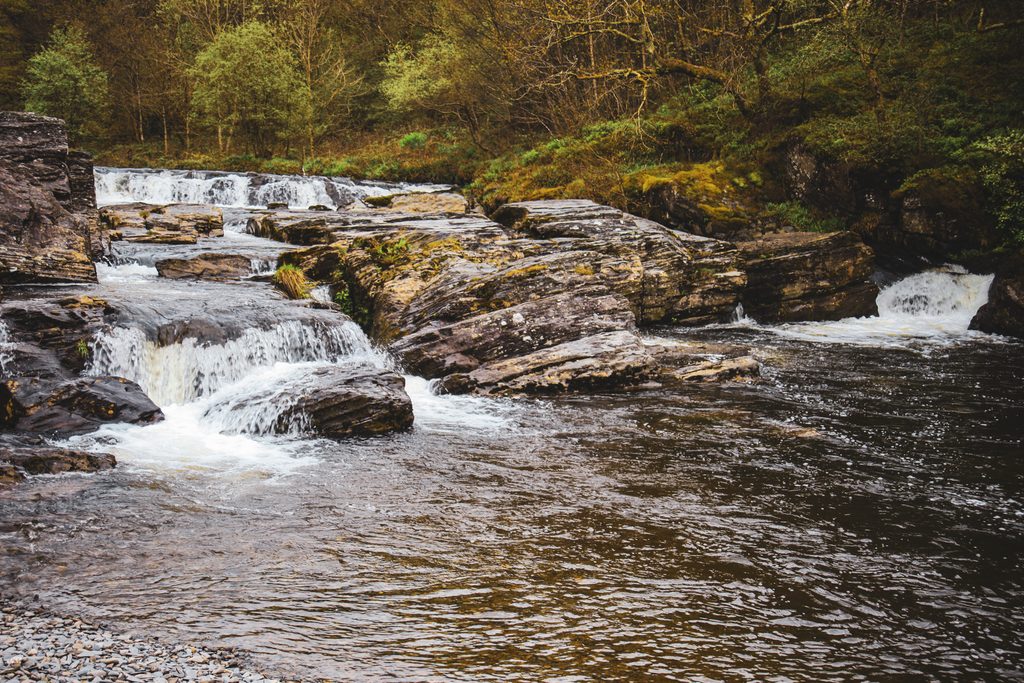
Leaving the open landscape behind, Coed Rheidol offers a very different side of this part of Wales. Here the River Rheidol tumbles through a wooded valley, flowing over rocks and creating a succession of small waterfalls and pools. It was these falls, rather than simply the woodland itself, that particularly attracted me to stop and explore with my camera.
Aberystwyth – Before the Mist Rolled In
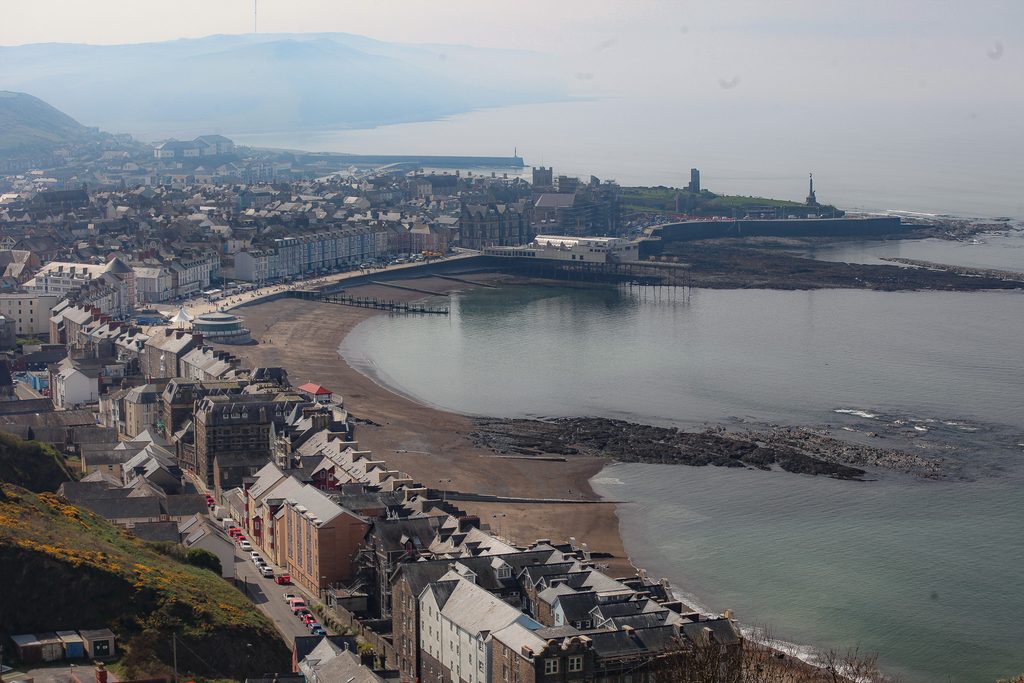
Arriving in Aberystwyth, I could see mist beginning to drift in from the sea and knew that the view across the town might soon disappear. I headed for the cliff railway, hoping to reach the top before the mist descended. From above, there was still time to capture the sweeping view across the rooftops, promenade and Cardigan Bay, with the approaching mist already beginning to soften the hills beyond.
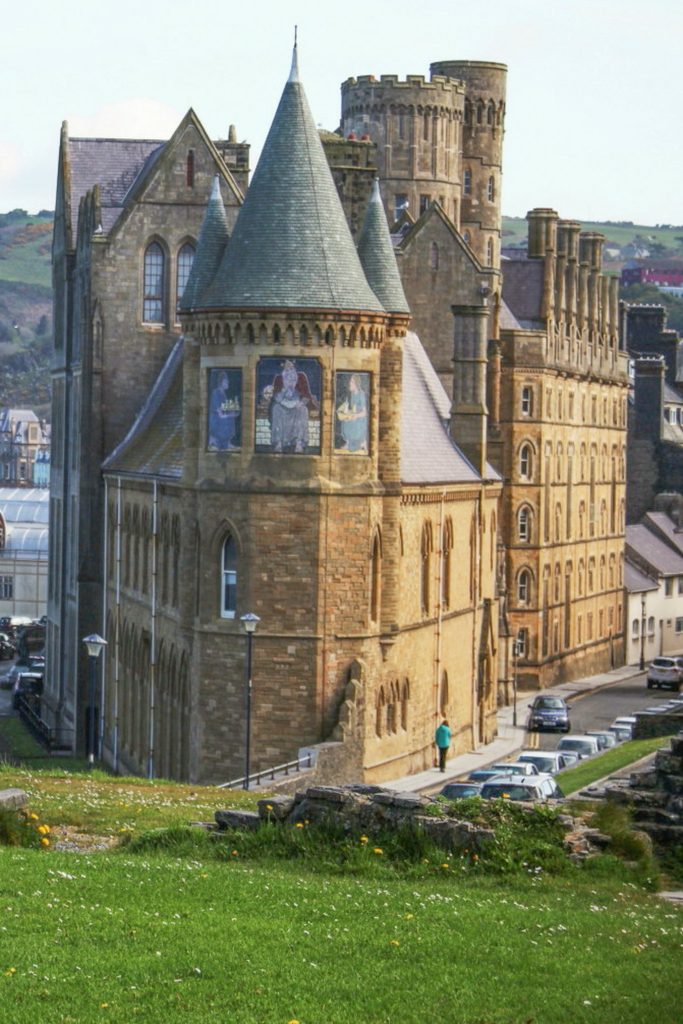
The Old College – An Aberystwyth Landmark
On an earlier visit to Aberystwyth, I photographed the Old College overlooking the seafront. Its distinctive Gothic architecture has long made it one of the town’s most recognisable buildings. Since I took this photograph, the building has been undergoing a major programme of restoration and redevelopment, making the image a record of how the Old College appeared before that work began.
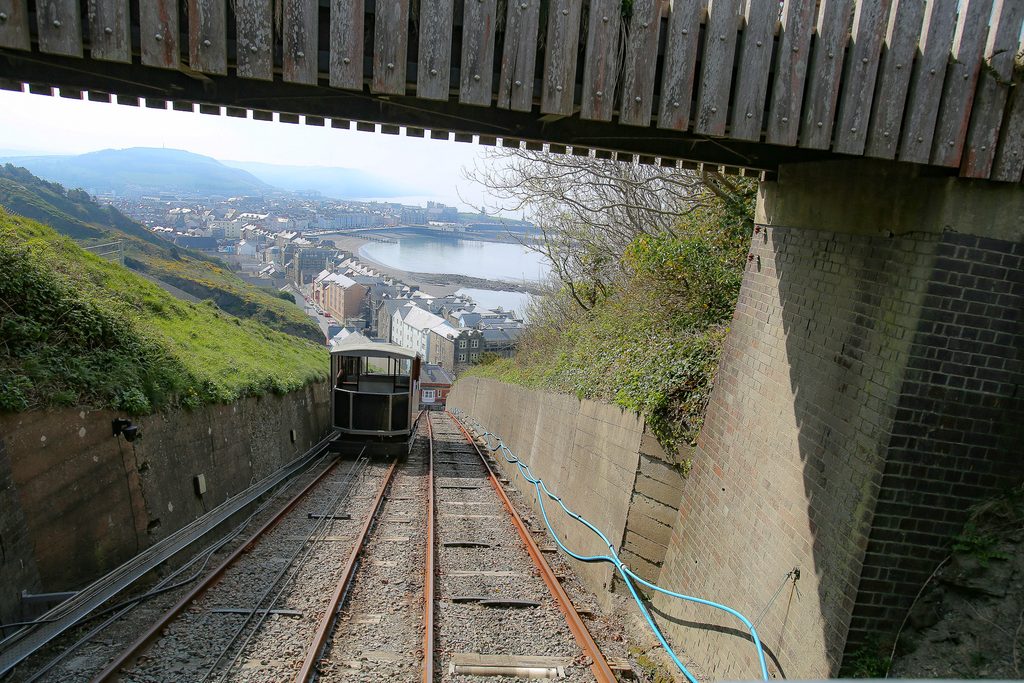
Aberystwyth Cliff Railway – Racing the Mist
With mist beginning to move in from the sea, I decided to take the cliff railway to the top of Constitution Hill while there was still a chance of seeing the town below. Fortunately, I reached the summit before the mist completely descended, giving me a wonderful view across Aberystwyth and Cardigan Bay. Sometimes photography is as much about being in the right place at the right moment as it is about planning the photograph.
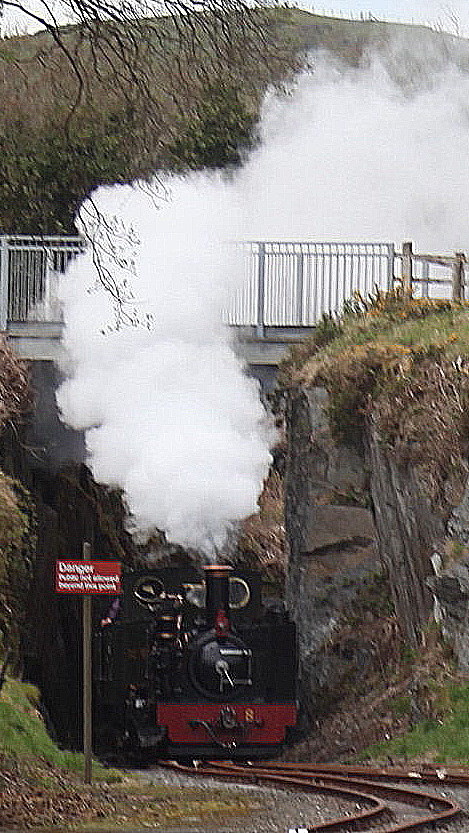
Devil’s Bridge – At the End of the Line
From Aberystwyth, the journey turned inland towards Devil’s Bridge. Here the Vale of Rheidol Railway reaches the end of its journey through the Rheidol Valley. I caught the steam locomotive approaching the station beneath the final bridge, its great cloud of steam making a dramatic entrance and providing one of those moments when having the camera ready really pays off.
Exploring the Falls at Devil’s Bridge
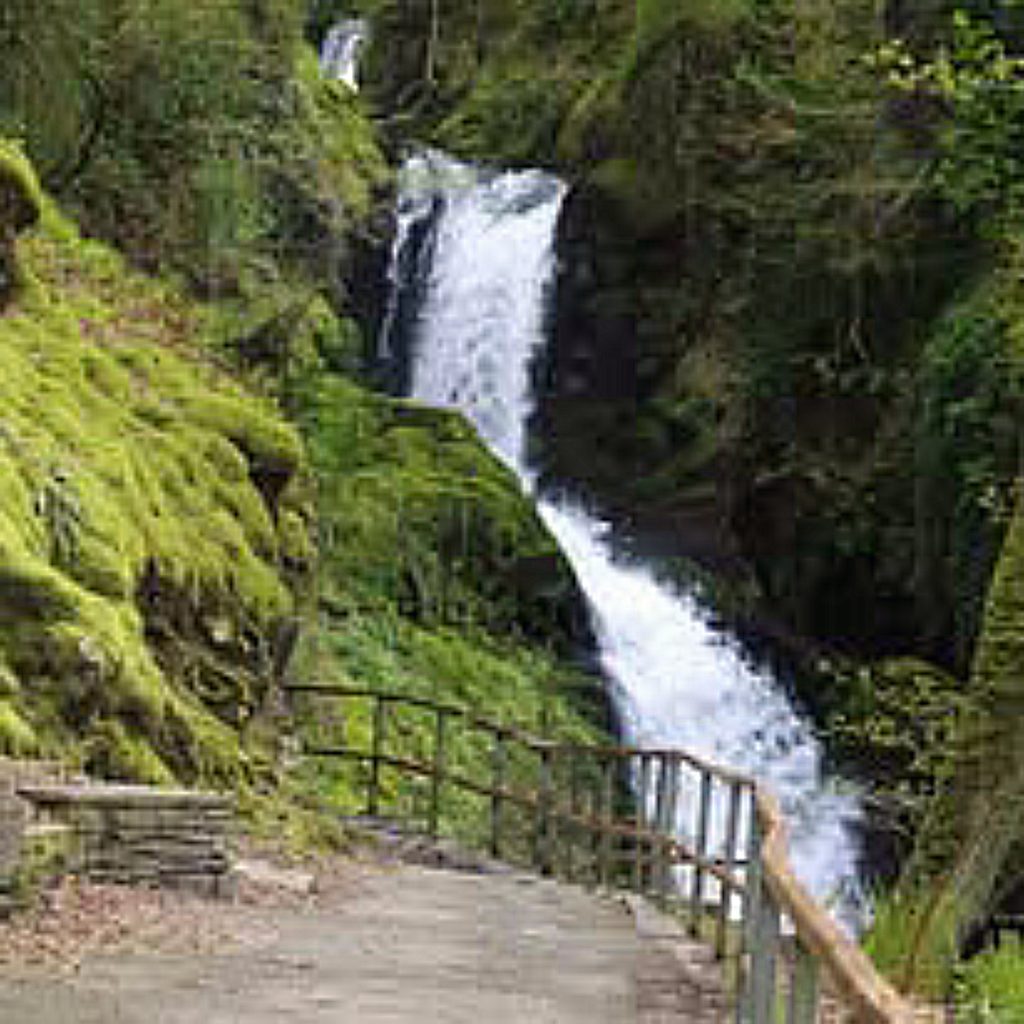
The railway is only part of the attraction at Devil’s Bridge. From the village, paths and steep steps lead down into the wooded gorge, where the water tumbles dramatically through the rocks below. I followed the walkway down towards the falls, stopping along the way to photograph the rushing water and the surrounding woodland.
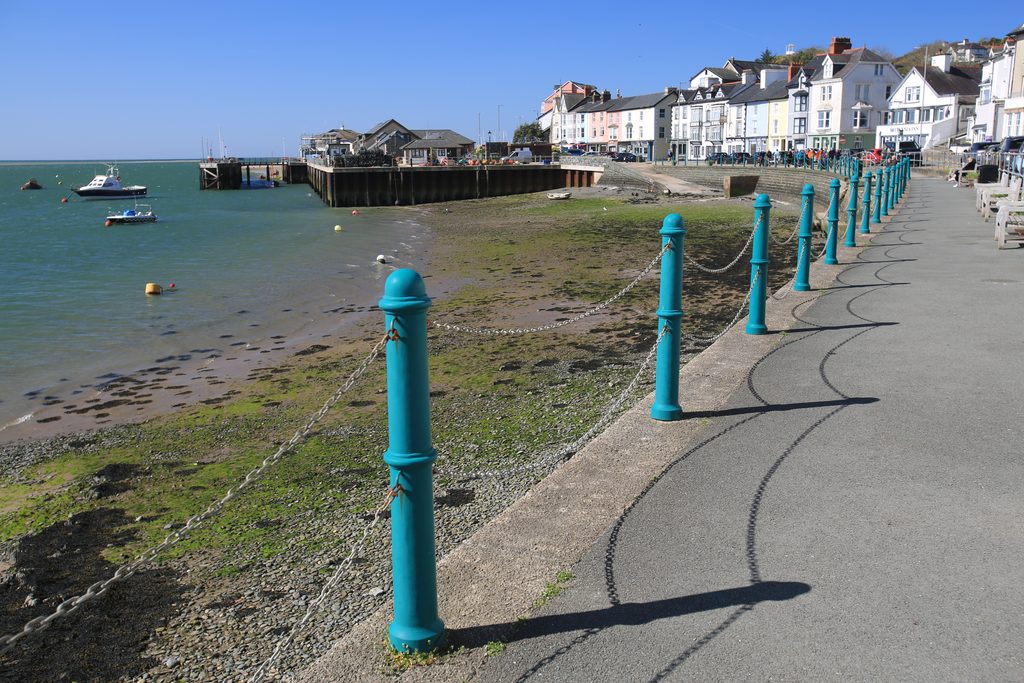
Aberdyfi – Where the Mountains Meet the Sea
Aberdyfi is one of my favourite places on the Welsh coast. Set where the mountains meet the broad Dyfi estuary, it has a wonderfully open feel, with colourful waterfront buildings, a small harbour and a beautiful sandy beach stretching away into the distance. I have returned here many times with my camera, and whatever the time of day, there always seems to be something different to photograph.
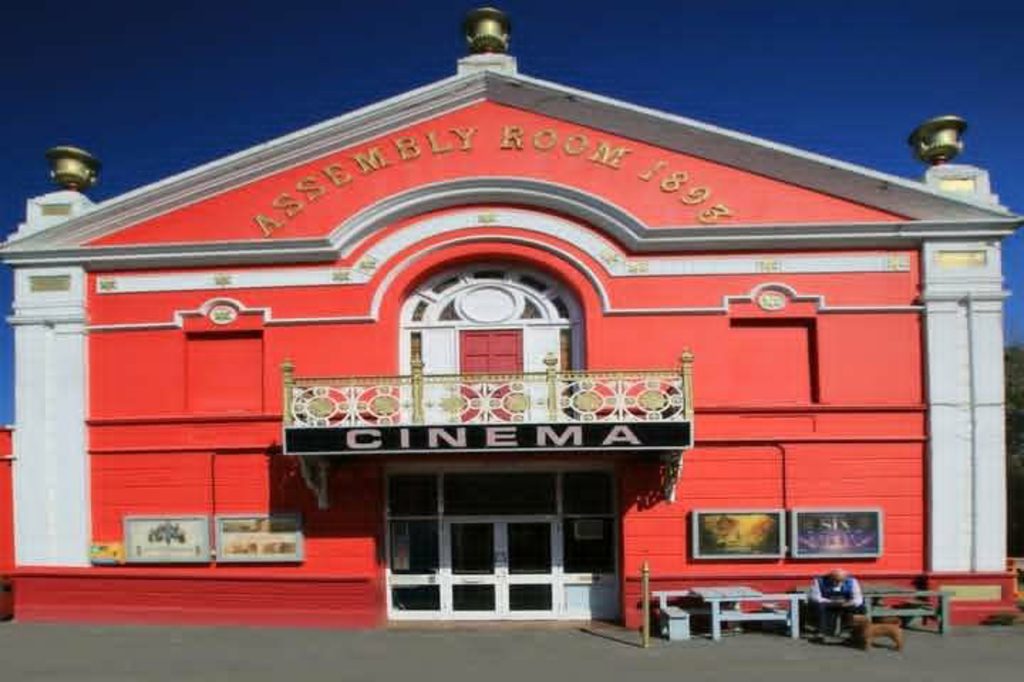
Tywyn – The Old Assembly Rooms
Tywyn is a traditional Welsh seaside town with a long sandy beach and a relaxed atmosphere. One of its most distinctive landmarks is the Assembly Rooms, built in 1893 and still standing proudly in the town centre. Its striking red frontage makes it one of the most recognisable buildings on this stretch of the Welsh coast and a reminder of Tywyn’s Victorian heritage.
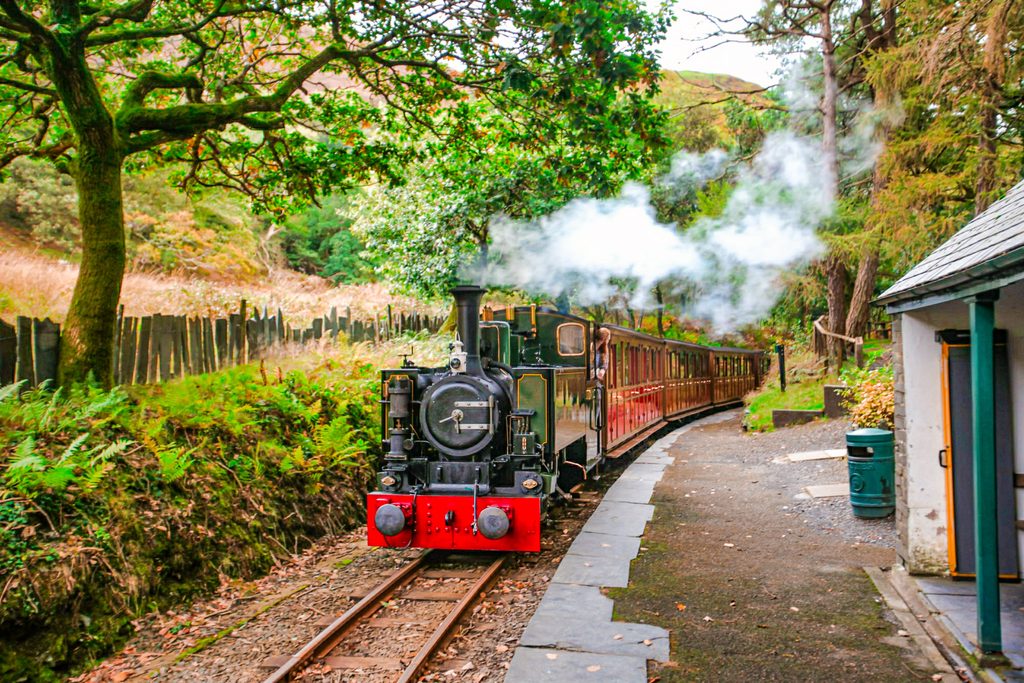
Talyllyn Railway – Steam into the Welsh Hills
From Tywyn, the Talyllyn Railway carries passengers away from the coast and into the beautiful countryside of southern Snowdonia. Its little steam locomotives and traditional carriages make the journey feel like travelling back in time, as the narrow-gauge line winds through woodland and along the valley towards Abergynolwyn and Nant Gwernol.
Fairbourne – Across the Mawddach to Barmouth
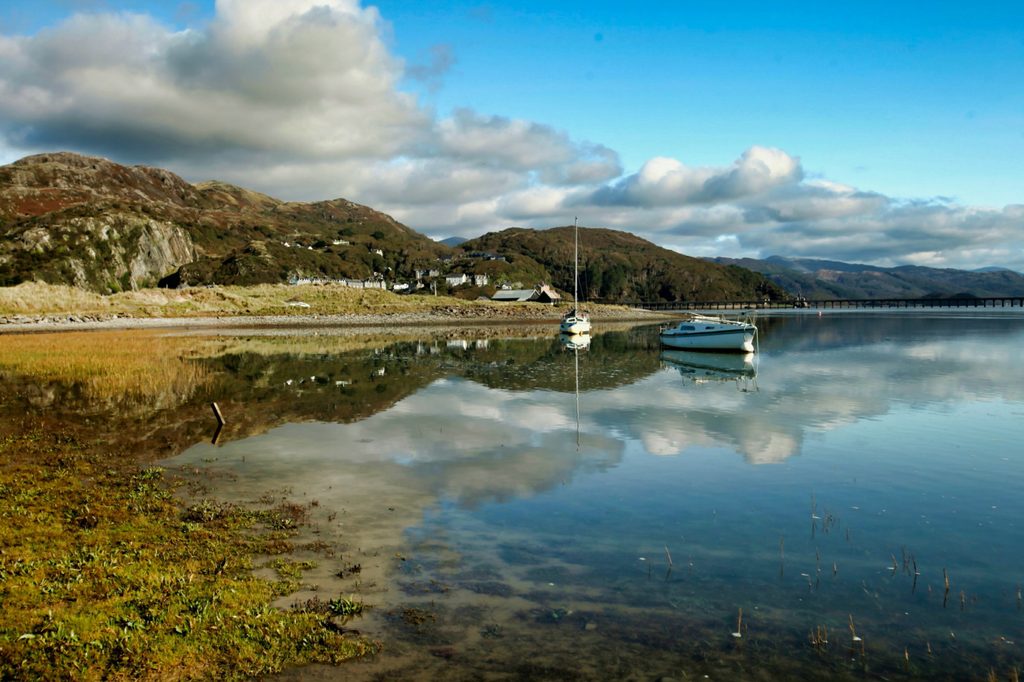
From Fairbourne, the Mawddach Estuary opens out into a magnificent landscape of water and mountains. On a calm day the reflections can be almost perfect, with small boats resting on the water and the long railway bridge stretching across the estuary towards Barmouth. It is one of those places where the journey itself becomes as memorable as the destination.
Penmaenpool – Crossing the Mawddach
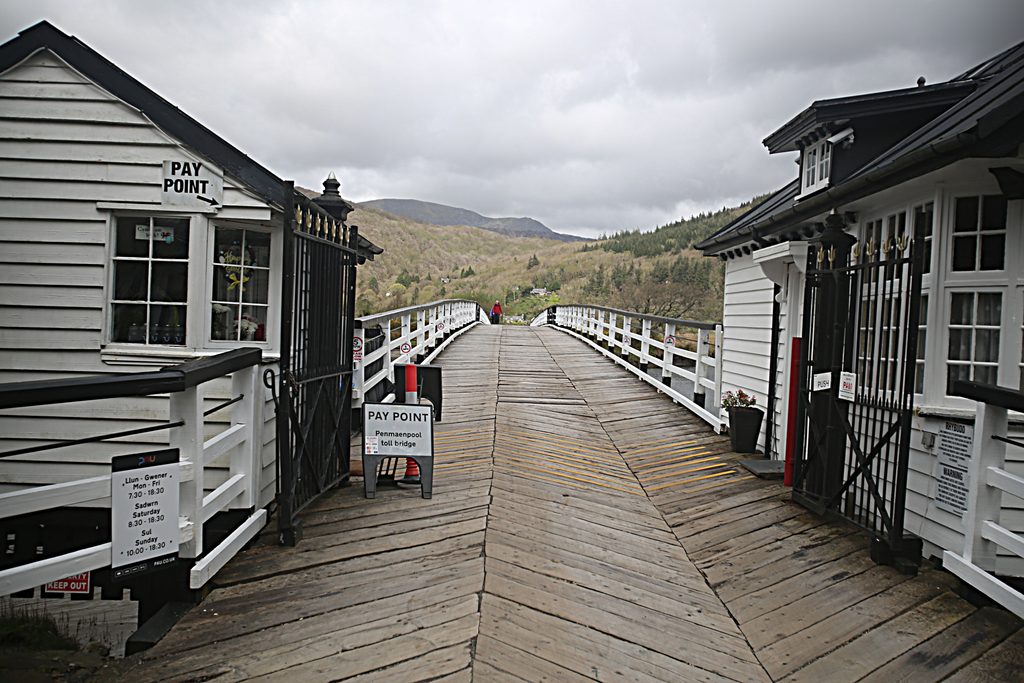
Leaving Fairbourne behind, the journey towards Barmouth takes a fascinating detour across the Mawddach Estuary at Penmaenpool. The old wooden toll bridge provides a wonderfully traditional way of crossing the water, its narrow timber roadway and white railings making the crossing feel like part of the journey rather than simply a means of getting from one side to the other.
Barmouth – We Have Arrived at the Coast
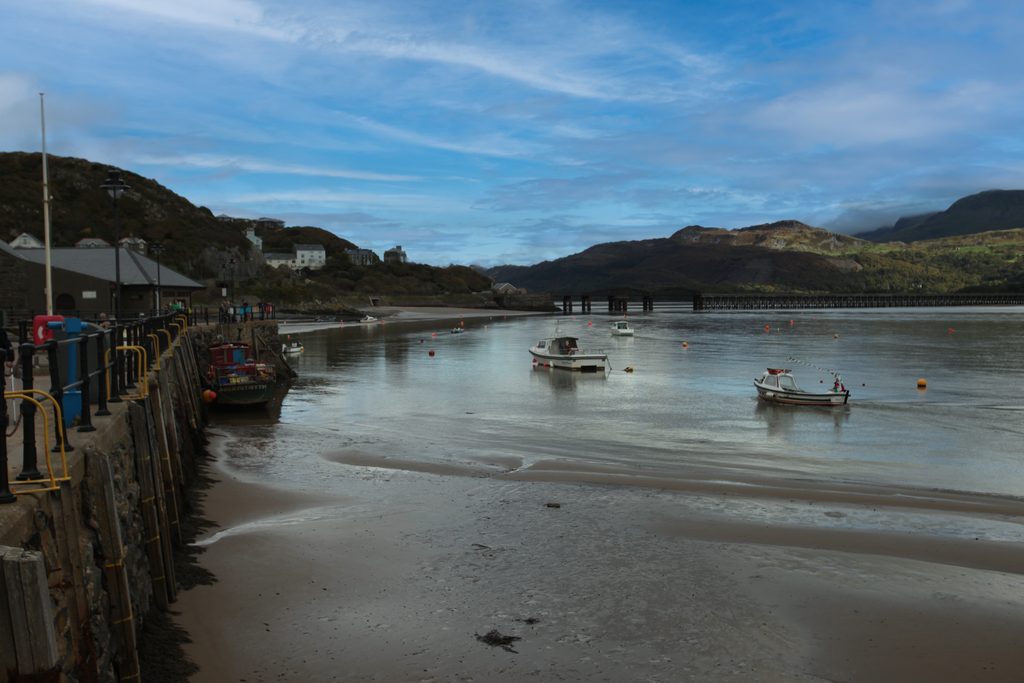
After our journey west from Welshpool, we have finally reached the Welsh coast at Barmouth. With the mountains of Eryri rising behind it and the Mawddach Estuary meeting the sea, it is a wonderful place to bring this part of our road trip to an end — and to simply stop for a while and enjoy the view.
Ready for England
Plymouth to Lands End.
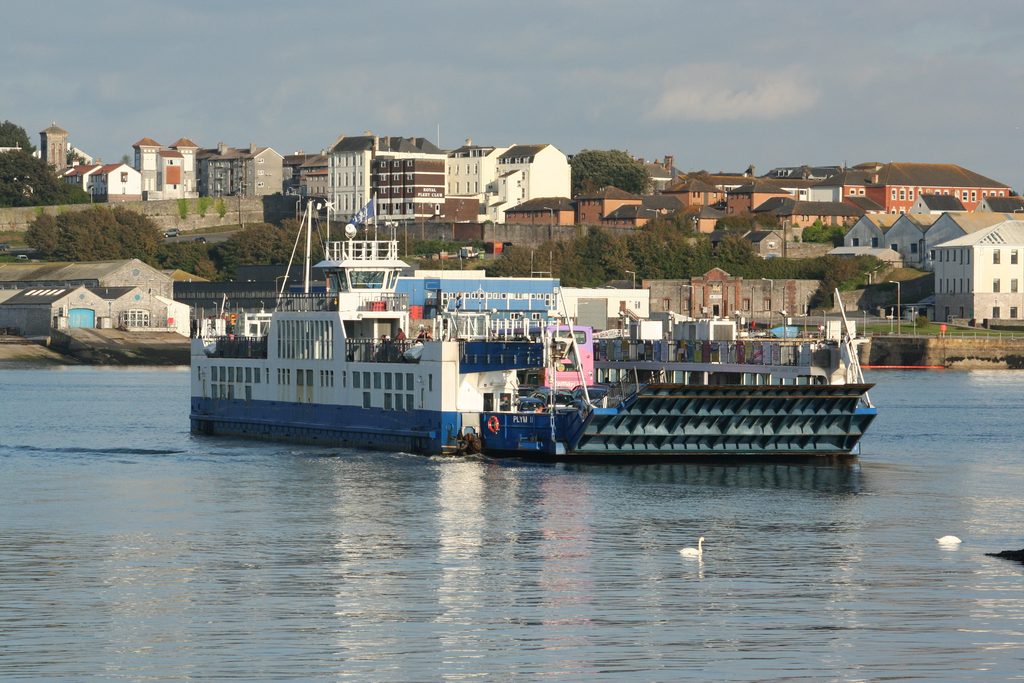
The Plymouth to Torpoint Ferry
Our journey through England begins in the historic waterfront city of Plymouth before heading west into Cornwall and towards Land’s End. Along the way, we’ll discover fishing villages, dramatic coastline, busy harbours and some of the far south-west’s most memorable scenery.
The Rame Peninsula – Cornwall’s Forgotten Corner
Most travellers leaving Plymouth hurry west into Cornwall, but just beyond Torpoint lies a corner that is easily missed. Known as Cornwall’s ‘Forgotten Corner’, the Rame Peninsula rewards the detour with historic villages, beautiful gardens, wooded countryside and a wonderfully unspoilt coastline.
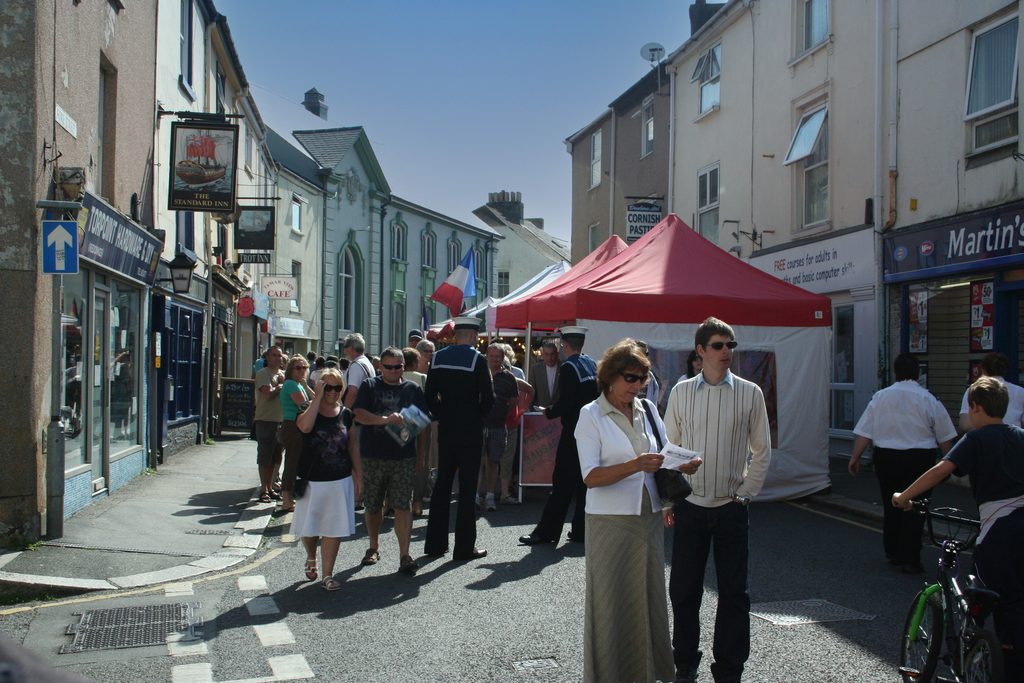
Torpoint Market Day
Torpoint has long-standing links with the Royal Navy, and on this market day personnel from nearby HMS Raleigh joined the activity in the town. From here, our detour into Cornwall’s Forgotten Corner continues towards the beautiful parkland and gardens of Mount Edgcumbe.
A little farther around the peninsula, Mount Edgcumbe offers a very different scene
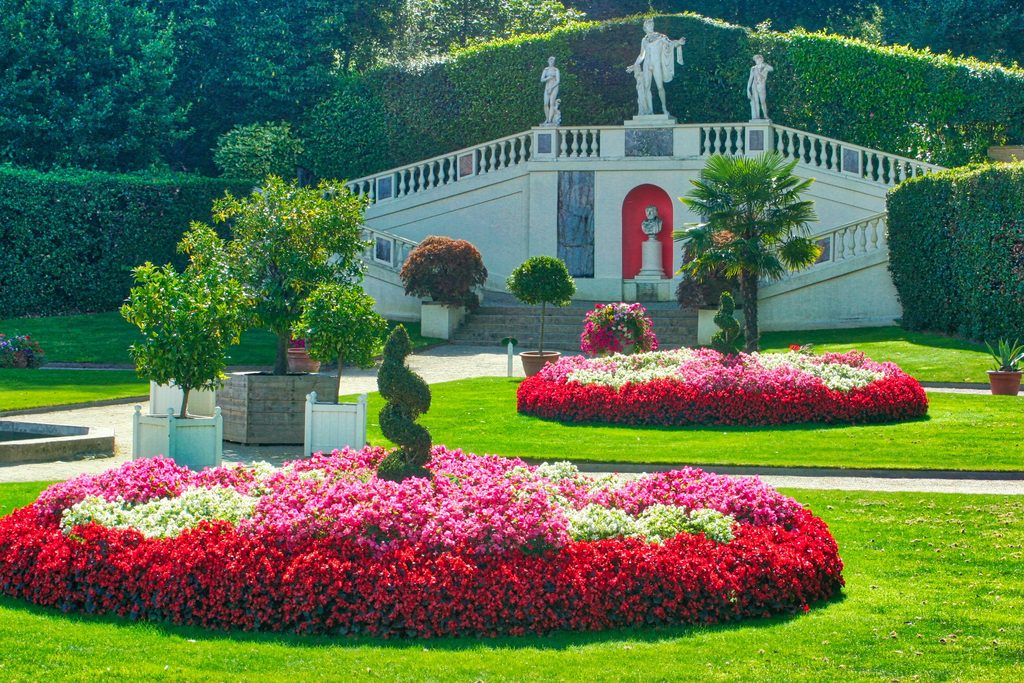
Mount Edgcumbe brings another surprise to the Rame Peninsula, with colourful formal gardens set within its extensive parkland overlooking the Tamar. It is a wonderful place to slow the journey down, explore on foot and discover just how much this often-overlooked corner of Cornwall has to offer.
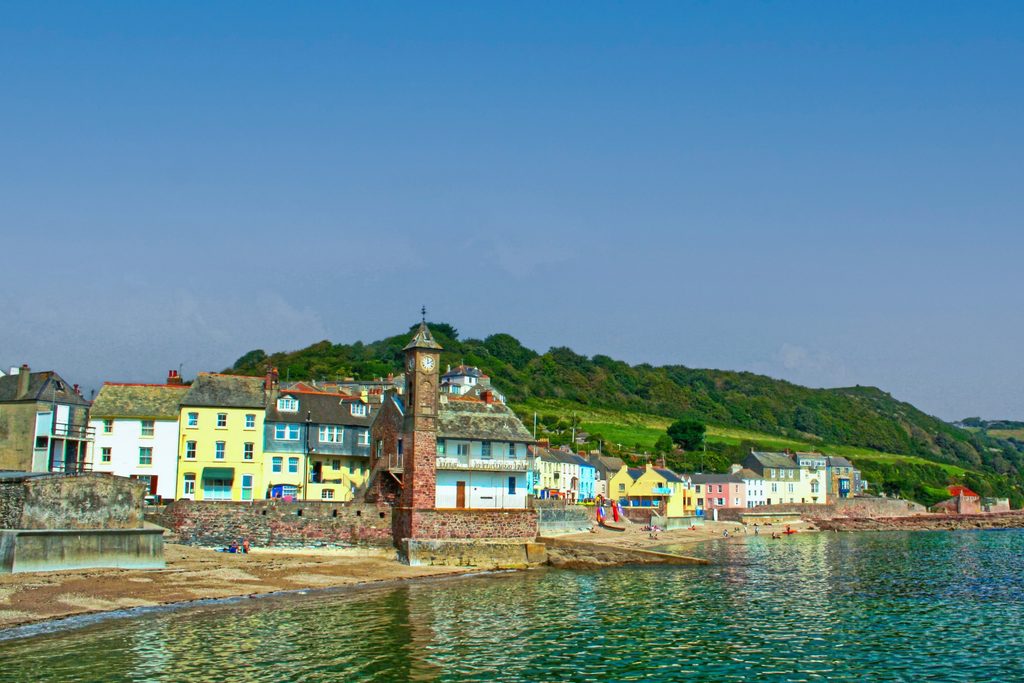
Kingsand and Cawsand.
Our final stop in Cornwall’s Forgotten Corner takes us to the neighbouring villages of Kingsand and Cawsand. Colourful cottages tumble down towards the water, creating a wonderfully traditional Cornish scene and a fitting place to end our detour around the Rame Peninsula.
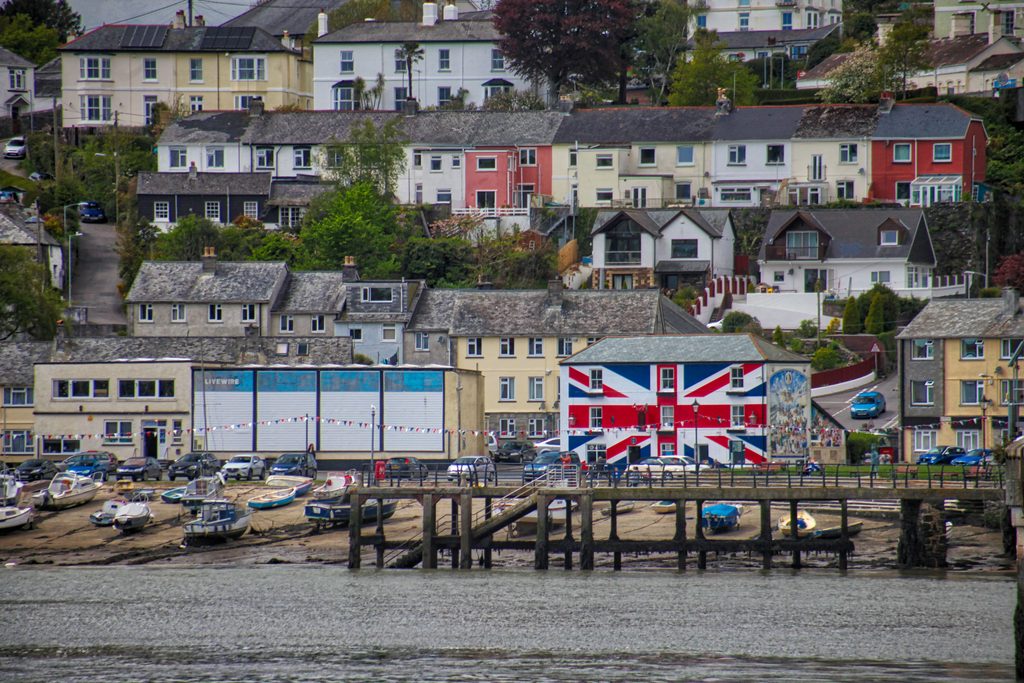
Saltash – A Pub You Can’t Miss
Arriving at Saltash, one building on the waterfront is almost impossible to overlook. The Union Inn is wrapped in an enormous Union flag, while a colourful mural on its side celebrates characters and events from the town’s history. It is certainly one of the more unusual sights on our journey west through Cornwall.
Looe – A Cornish Harbour Town
Continuing west, we arrive at Looe, where the town gathers around its busy harbour and the steep hillsides rise above the water. Fishing boats and pleasure craft share the harbour, while narrow streets and waterside buildings give Looe the unmistakable character of a traditional Cornish coastal town.
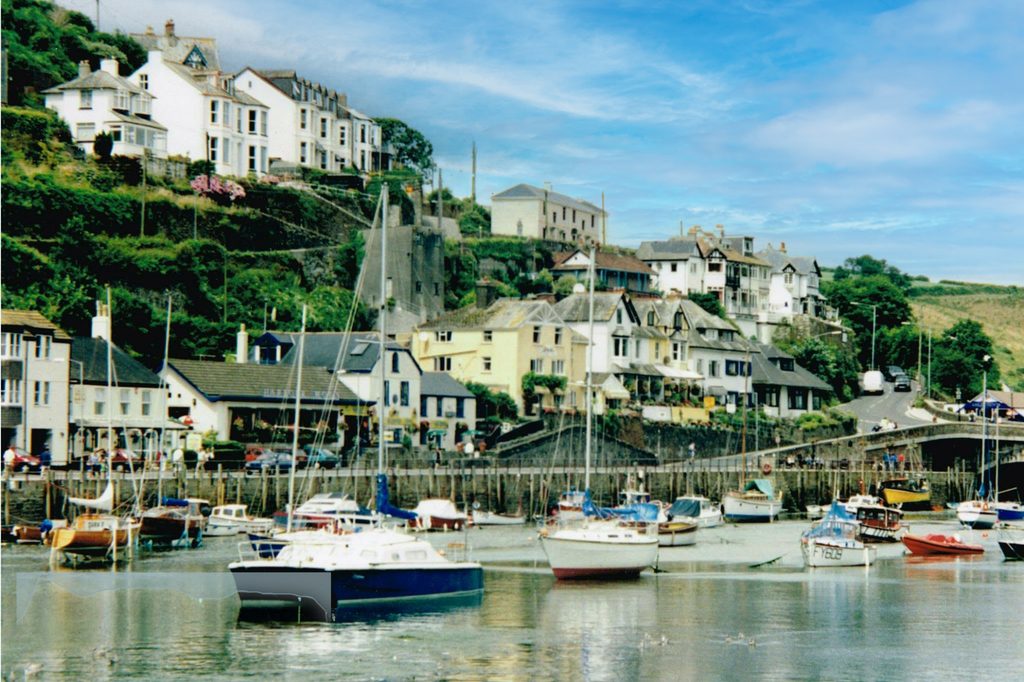
Polperro – Fishing, Smuggling and Narrow Streets
Polperro is one of Cornwall’s most characterful fishing villages, with cottages crowded around narrow streets leading down towards the harbour. Its history is closely tied to fishing and, in earlier times, smuggling — a story still remembered in the village’s heritage museum.
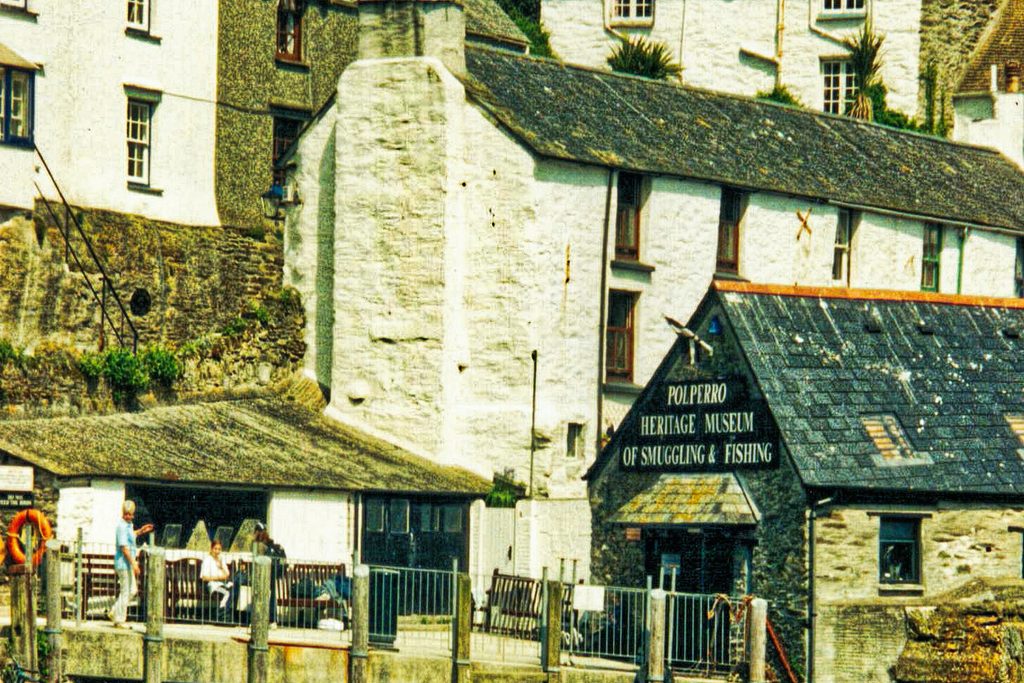
The Heritage Museum.
Away from the harbour, Polperro’s tightly packed cottages and narrow passages reveal another side of this historic Cornish village.
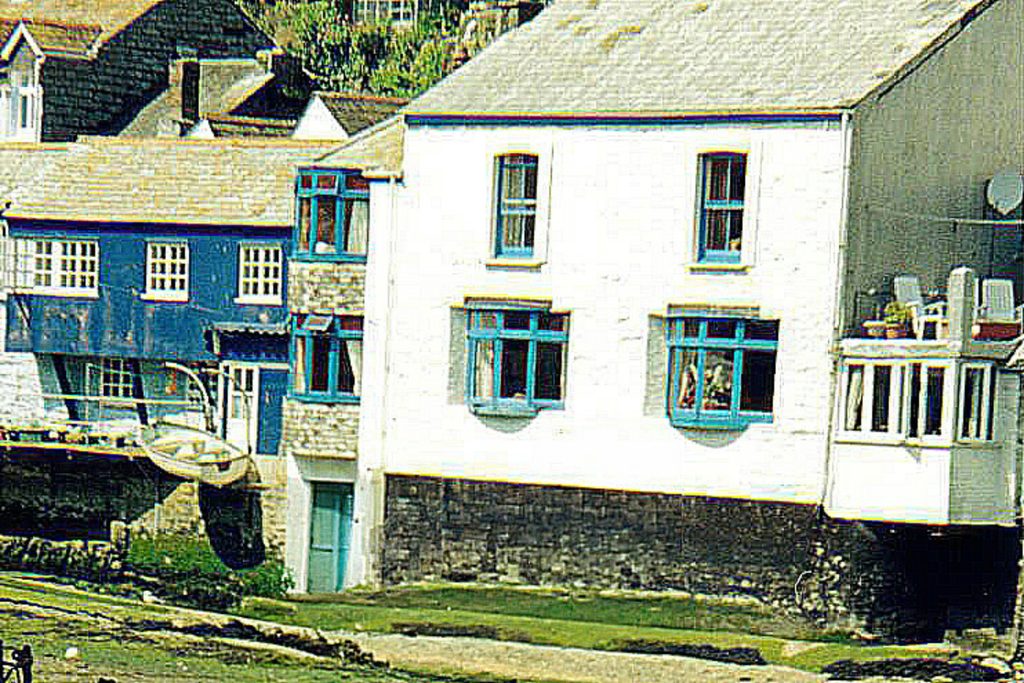
Polperro → Lanhydrock → Lostwithiel → Fowey
Lanhydrock – A Cornish Country Estate
Leaving the coast for a while, our journey takes us inland to Lanhydrock, an impressive country house surrounded by beautiful gardens and a wooded estate. Its grand stone architecture and formal grounds reveal a very different side of Cornwall from the fishing villages and harbours we have visited so far.
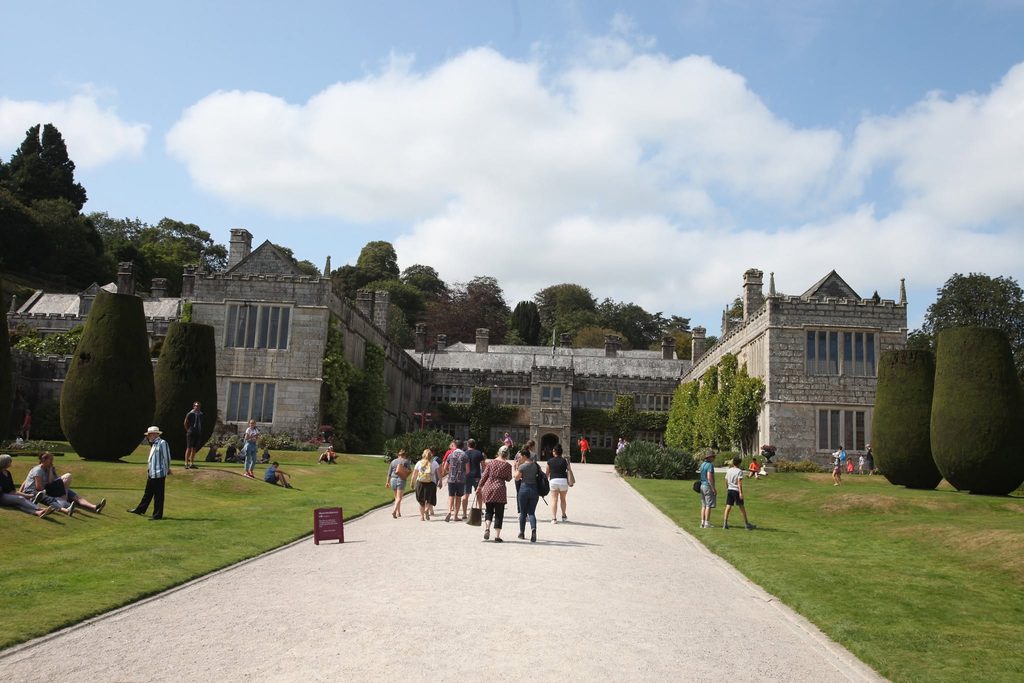
Lostwithiel – A Bridge with a Story
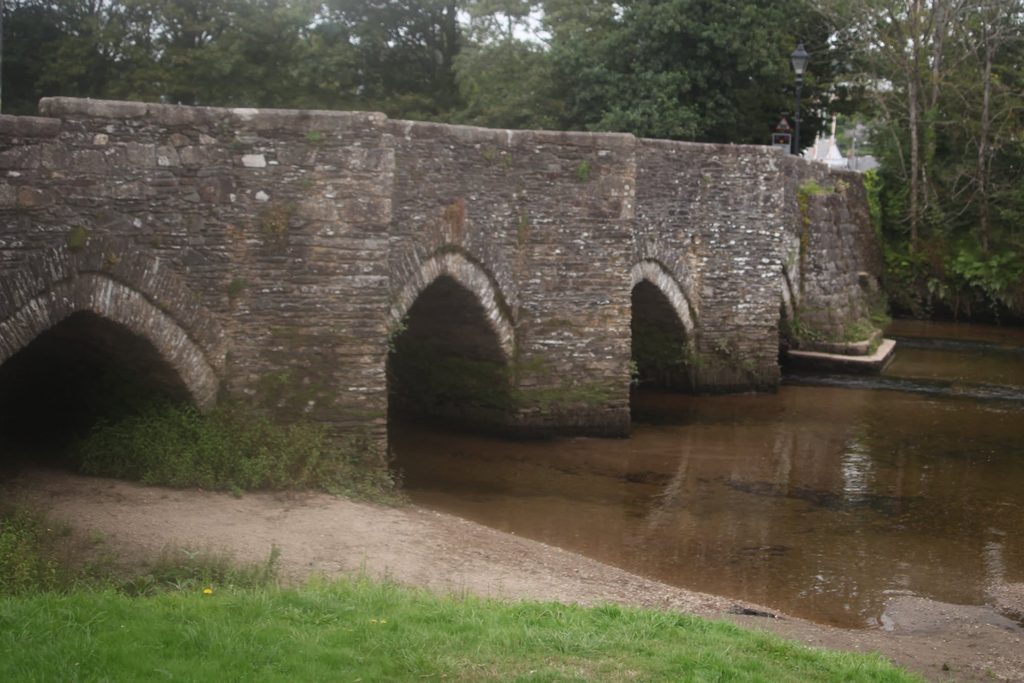
Crossing the River Fowey at Lostwithiel, this old stone bridge has centuries of history beneath its arches. A bridge was recorded here as far back as 1280, while the present structure developed over later centuries and even narrowly escaped destruction during the English Civil War. Today it provides a fascinating reminder of Lostwithiel’s long past.
Fowey – A Working Port Full of Character
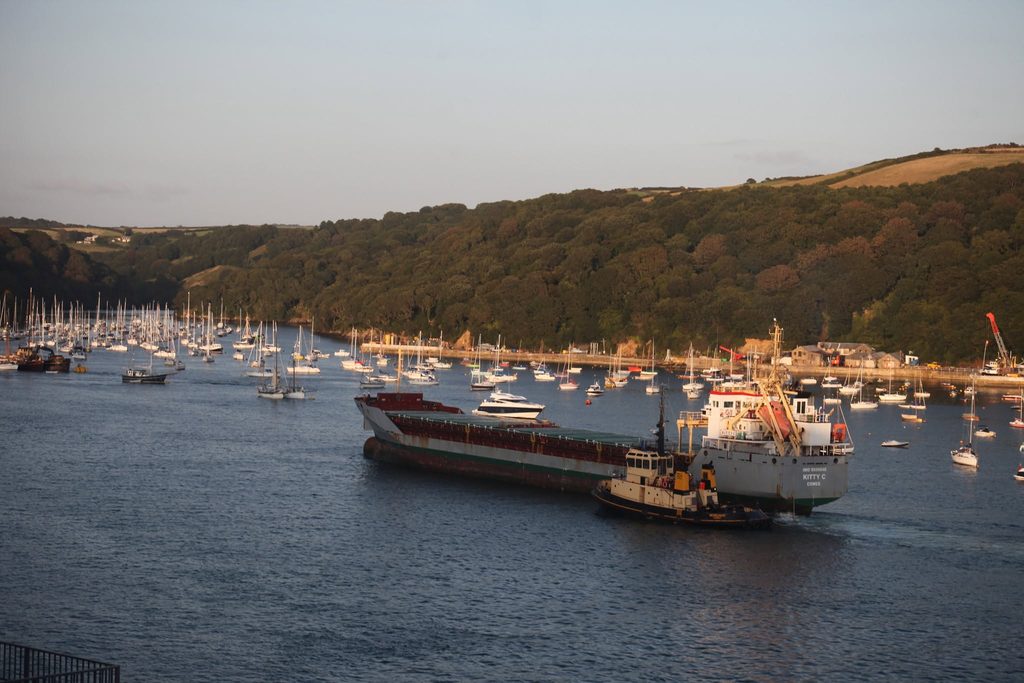
Following the River Fowey towards the coast brings us to a town where industry, sailing and tourism share the same water. Fowey remains a busy working port, traditionally associated with the export of china clay, yet around the harbour there is another side to the town — colourful, lively and unmistakably Cornish
Cargo ship and tug
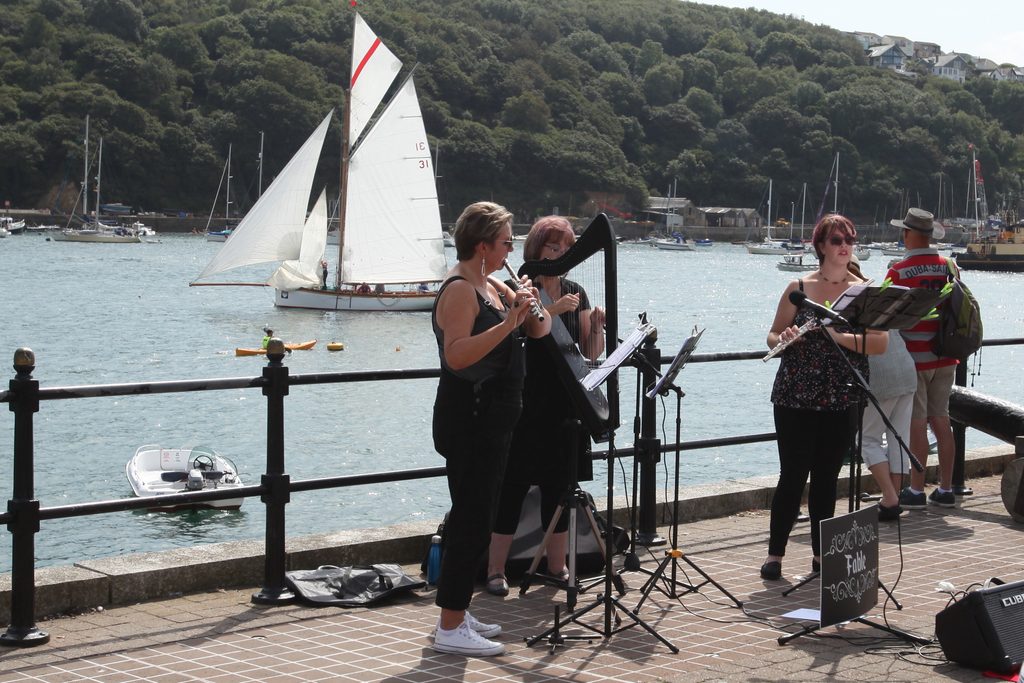
Away from the commercial activity, Fowey has a much more relaxed and lively side. Music beside the waterfront, sailing on the river and the bustle of visitors all add to the atmosphere of a town that knows how to enjoy its beautiful setting.
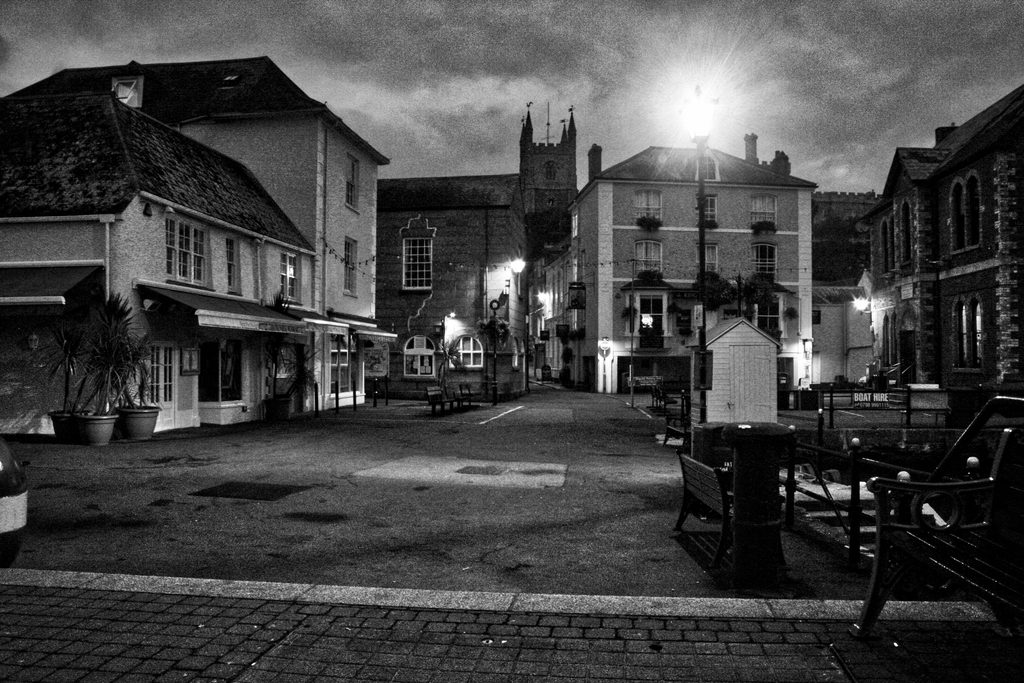
As evening falls, Fowey takes on a very different character. The daytime bustle fades, the streets become quieter and the old buildings beneath the harbour lights reveal a more atmospheric side to the town
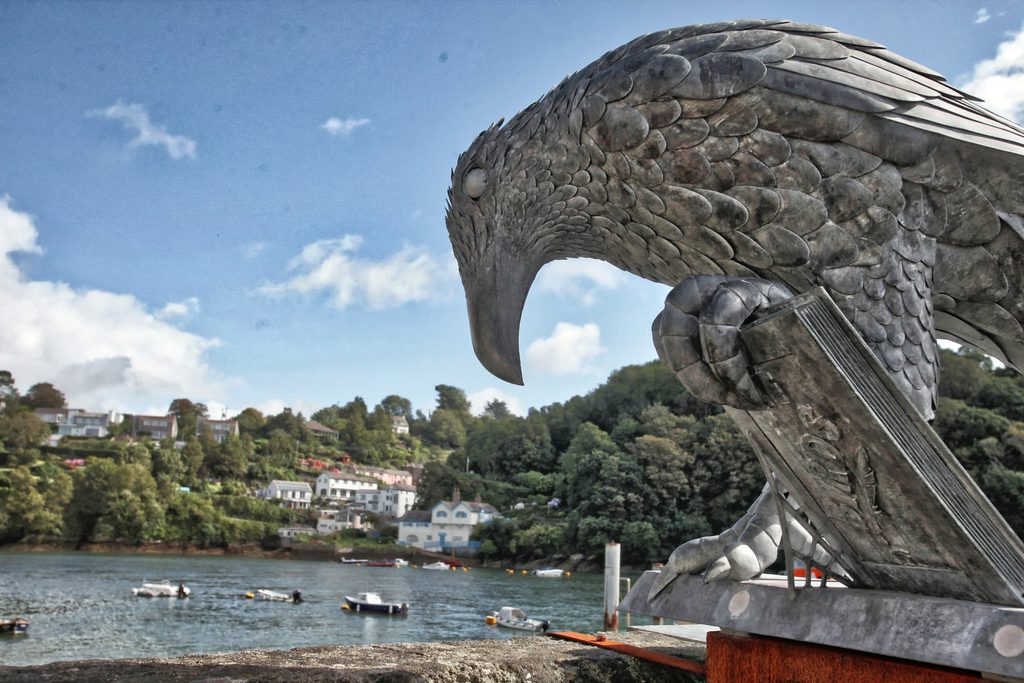
Fowey’s literary connections provide one final surprise. Close to the former home of writer Daphne du Maurier, this striking metal bird was created as a celebration of her work. Made by Cornish sculptors Gary and Thomas Thrussell, its dramatic position overlooking the River Fowey provides a memorable reminder of the author whose stories became so closely associated with Cornwall.
Charlestown – A Harbour from Another Age
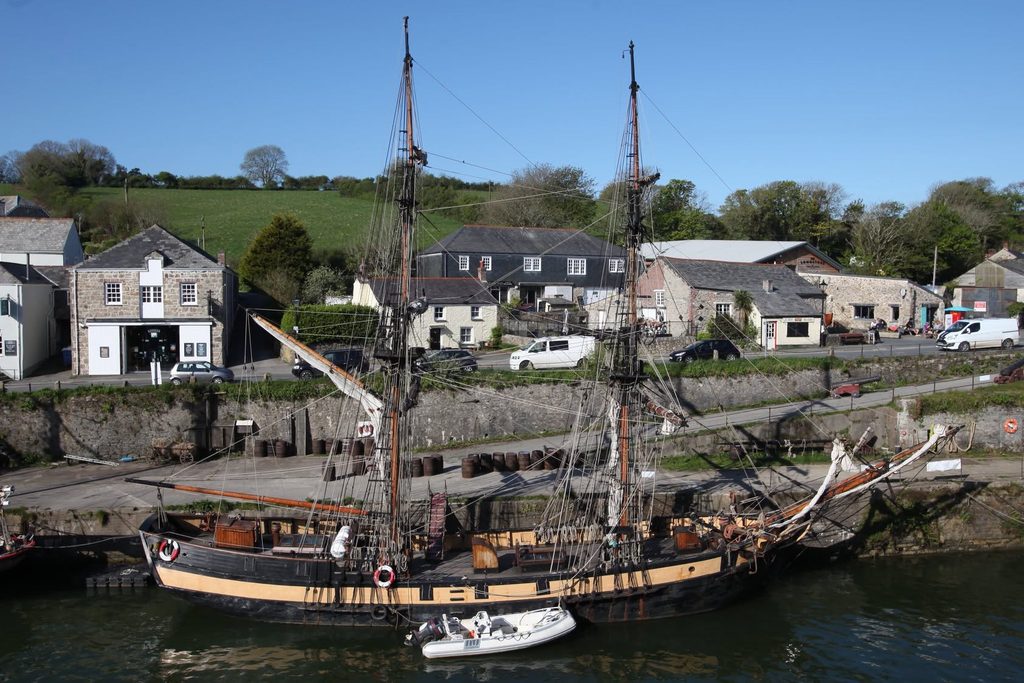
Charlestown feels like stepping back into Cornwall’s maritime past. Its remarkably preserved harbour, stone quays and traditional sailing ships create a scene that has changed surprisingly little over the years. Once developed for the export of copper and china clay, the harbour has also become familiar to millions through its appearances in film and television.
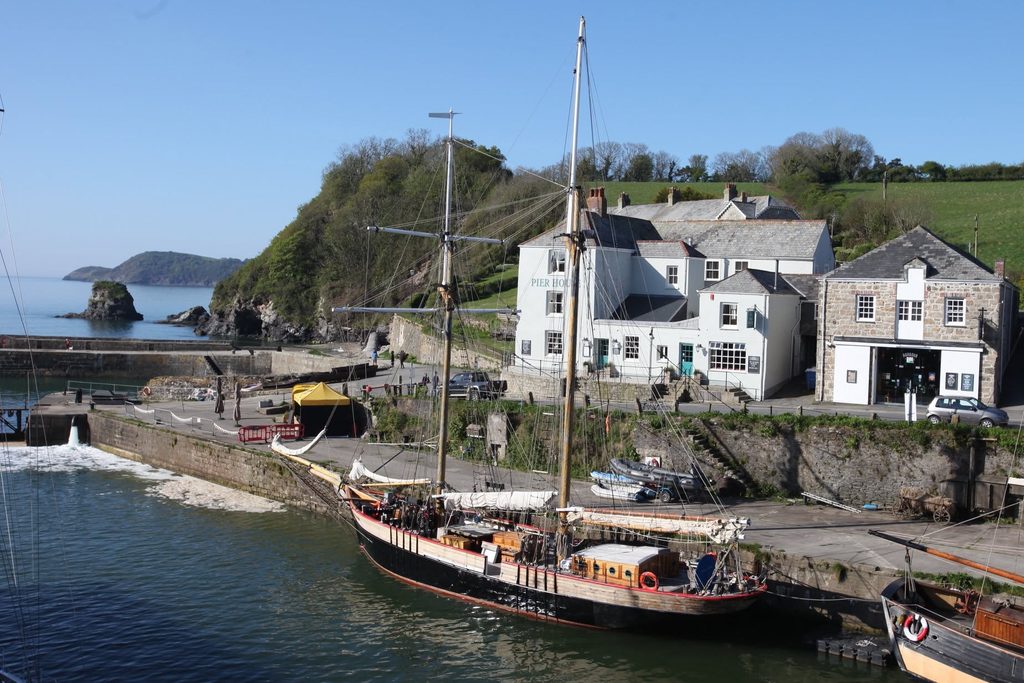
The tall ships are an unforgettable part of Charlestown’s character. Seen against the old stone quays and harbour buildings, their maze of masts and rigging helps explain why this small Cornish harbour has proved such a convincing setting for period dramas.
Truro – Cornwall’s Cathedral City
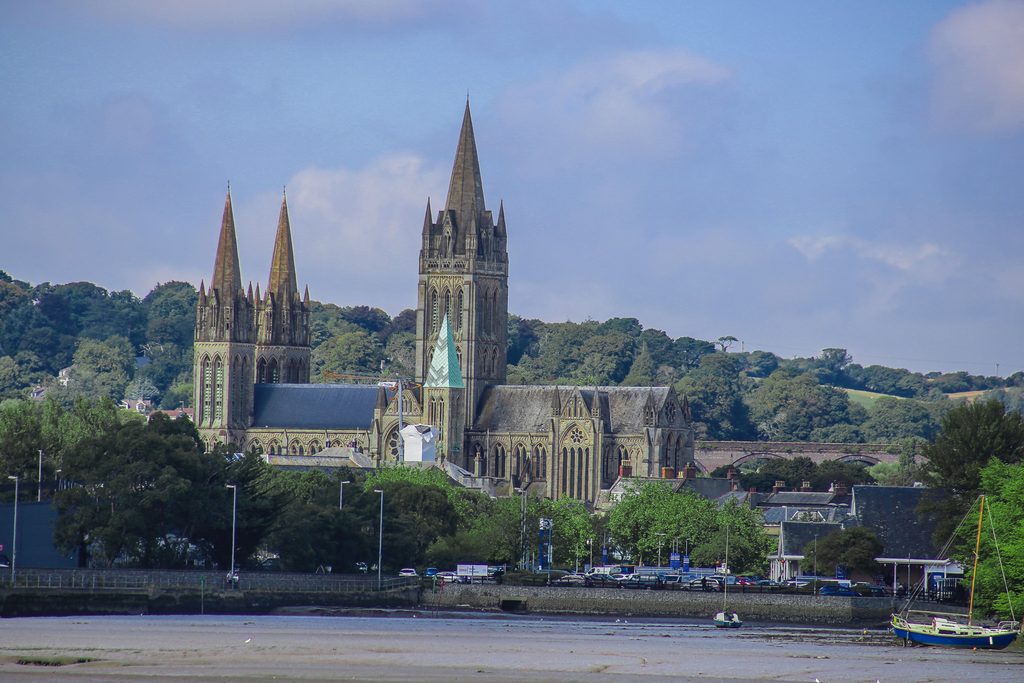
Leaving the coast behind for a while, our journey takes us to Truro, Cornwall’s only city. Dominating the skyline is magnificent Truro Cathedral, its three soaring spires visible from far beyond the city centre. Around it, historic streets and buildings reflect Truro’s long importance as a centre of Cornish commerce and culture.
Inside Truro Cathedral
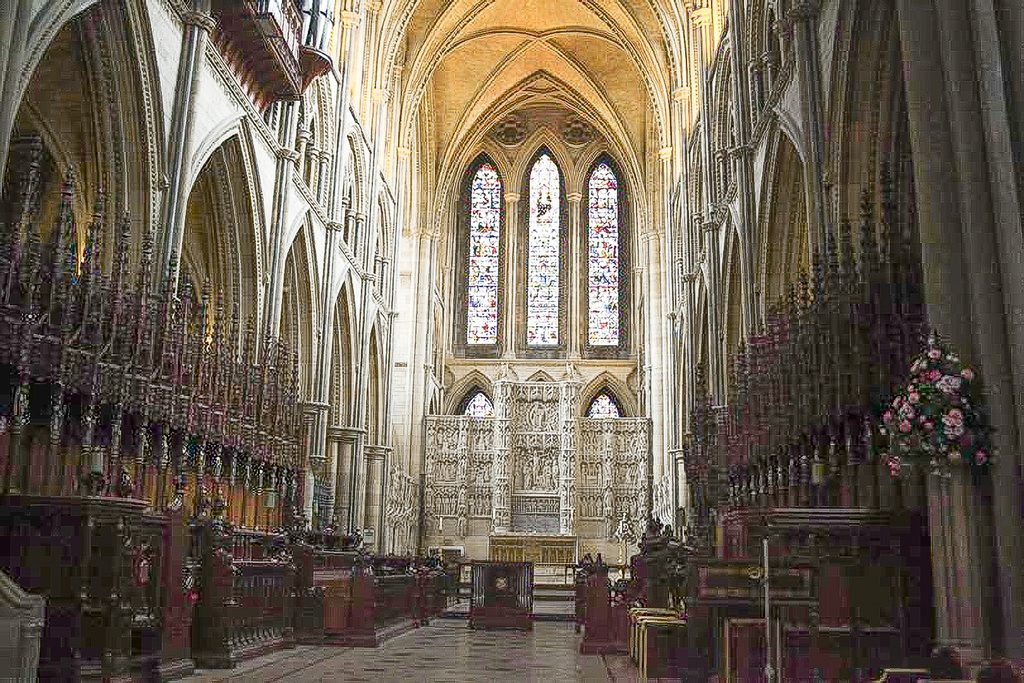
Step inside and the scale of the cathedral becomes even more impressive. Soaring arches, intricate stonework and stained-glass windows draw the eye towards the magnificent east end, creating a sense of height and space that is difficult to appreciate from outside.
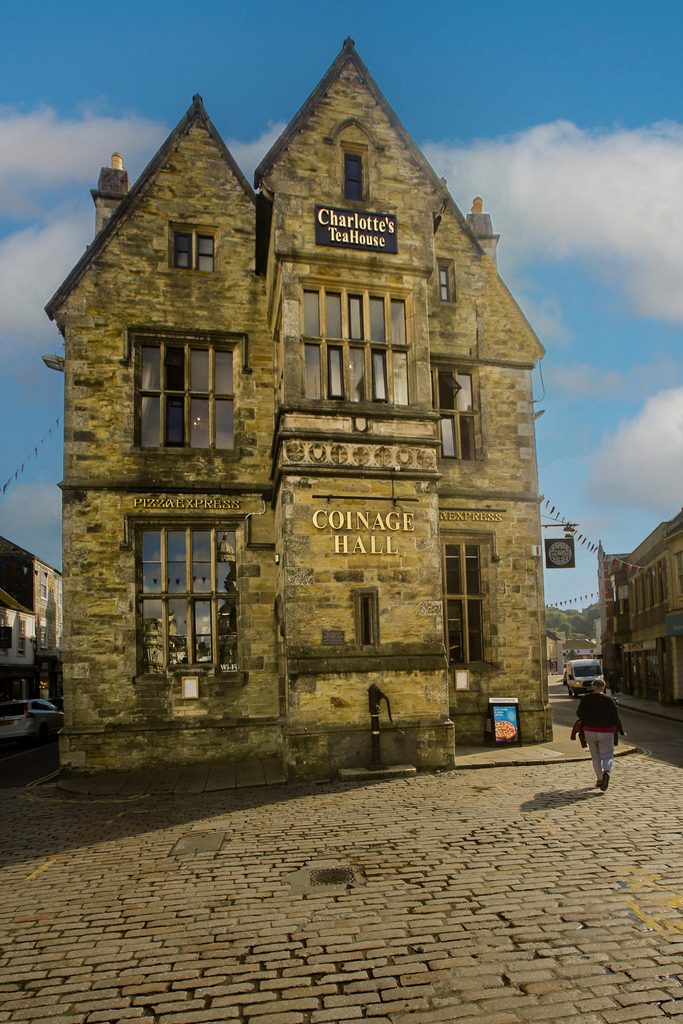
Coinage Hall – A Reminder of Cornwall’s Mining Past
Beyond the cathedral, Truro’s streets contain reminders of the wealth once generated by Cornwall’s mining industry. Coinage Hall recalls the days when tin was brought to the town to be assessed and taxed, helping establish Truro as an important commercial centre.
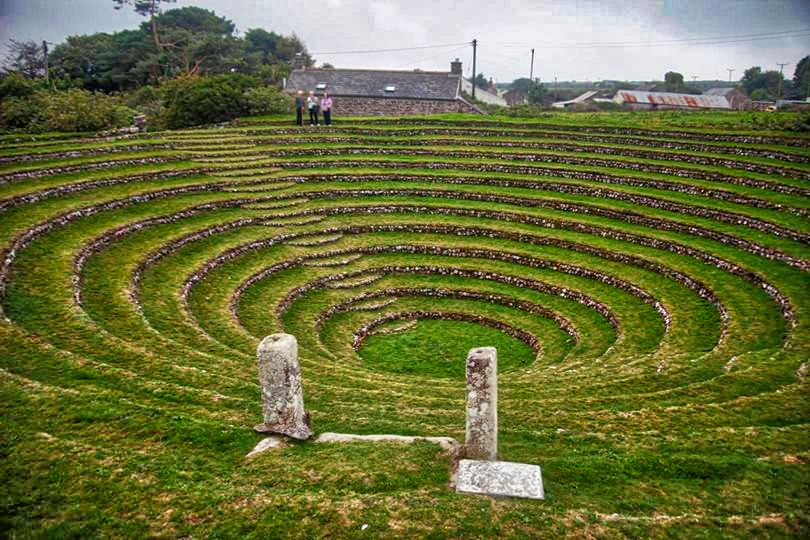
Gwennap Pit – In the Footsteps of John Wesley
Hidden away in the Cornish countryside is one of the most remarkable places associated with the Methodist movement. John Wesley first preached at Gwennap Pit in 1762 and returned many times, addressing huge gatherings in this natural amphitheatre. The distinctive grass-covered terraces seen today were created later, transforming the site into the extraordinary open-air meeting place we see today.
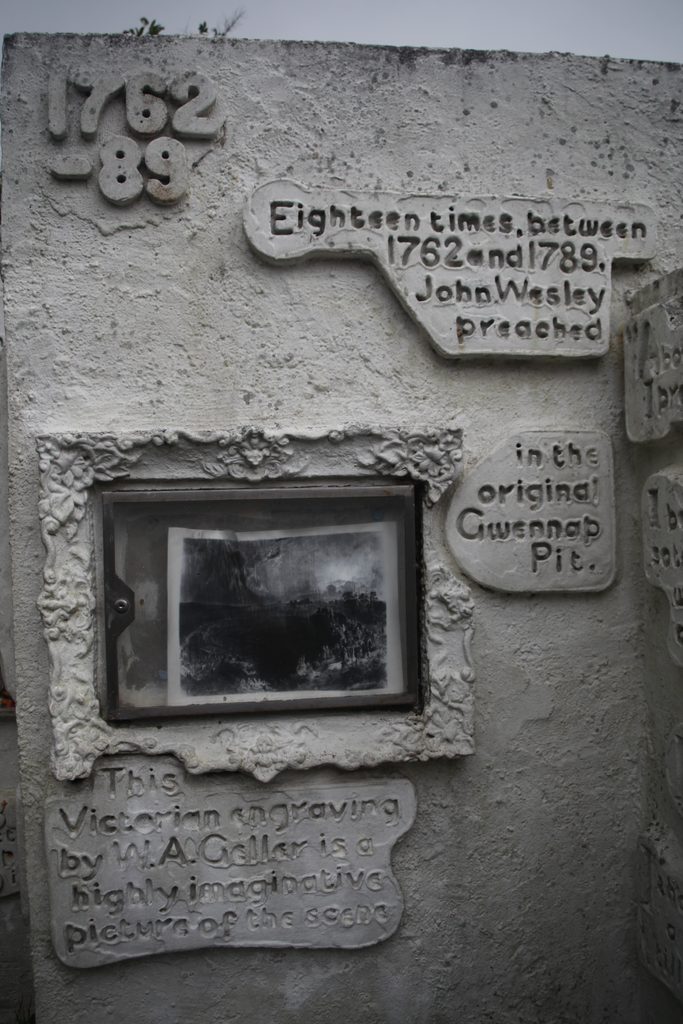
A simple memorial at the site records that John Wesley preached here eighteen times between 1762 and 1789. More than two centuries later, Gwennap Pit remains a remarkable reminder of Cornwall’s strong Methodist heritage
Falmouth – A Town Shaped by the Sea
Falmouth has always lived alongside the water. Its sheltered harbour is filled with everything from small pleasure boats and sailing yachts to working vessels and visiting ships, while the town rises behind it in a jumble of streets and waterfront buildings. It is a place where Cornwall’s maritime past remains very much part of everyday life.
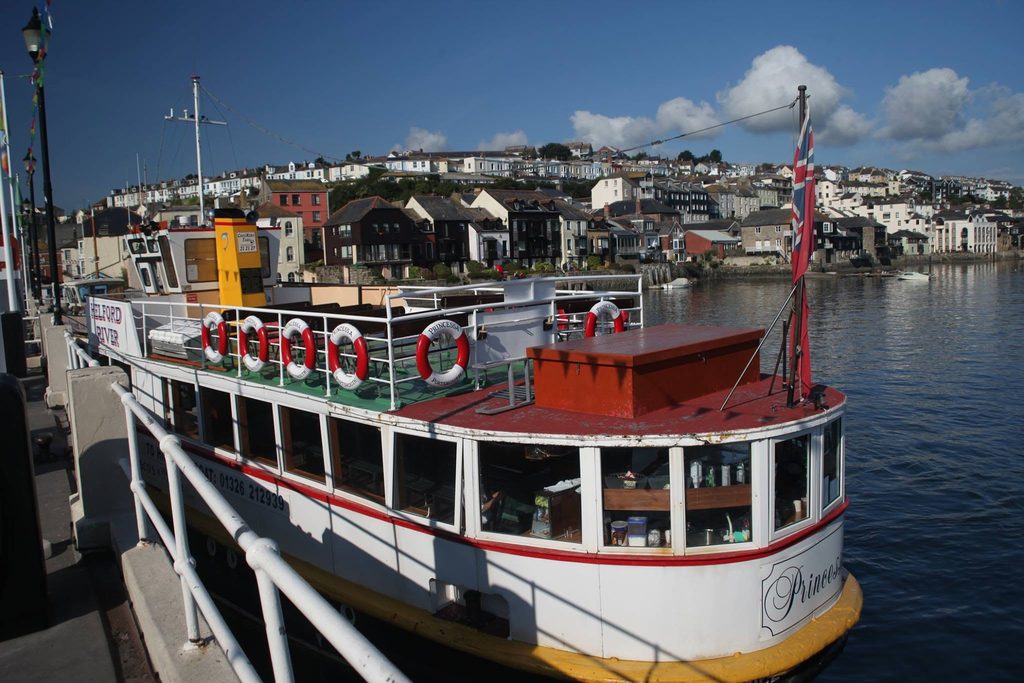
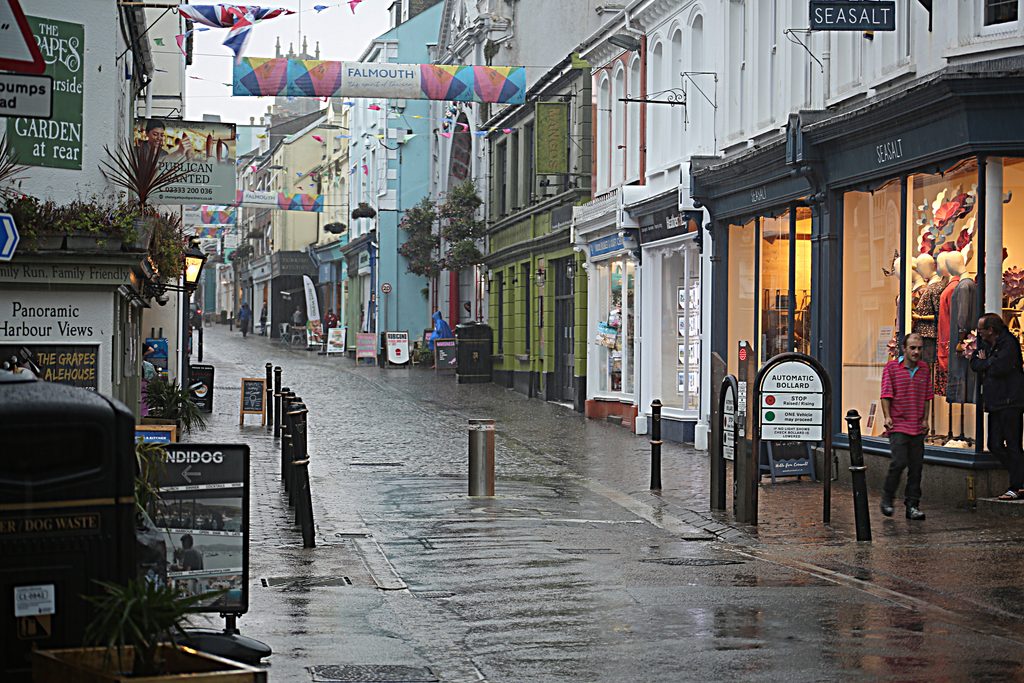
Falmouth – Away from the Waterfront
Step back from the harbour and Falmouth reveals another side of its character. Its busy streets are filled with independent shops, cafés and colourful buildings, and even a little Cornish rain does little to discourage visitors from exploring the town.
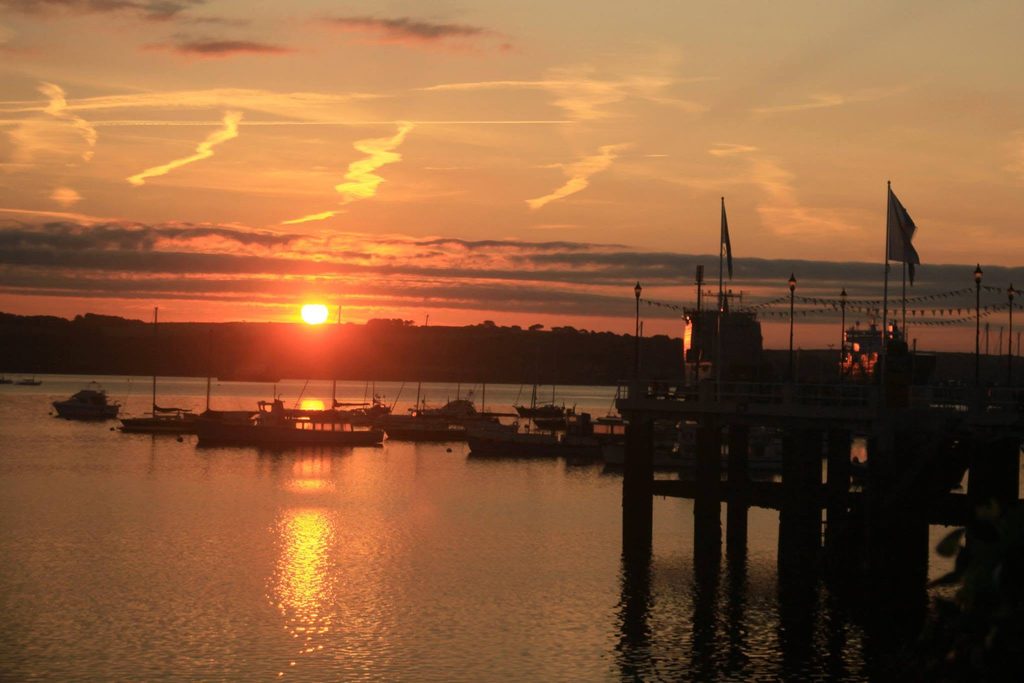
Falmouth – A New Day on the Harbour
Early morning brings a very different atmosphere to Falmouth. As the first light spreads across the harbour, boats lie quietly at their moorings and the busy waterfront has yet to come fully to life. It is a peaceful side of this maritime town — and a fitting view to leave behind as our journey continues
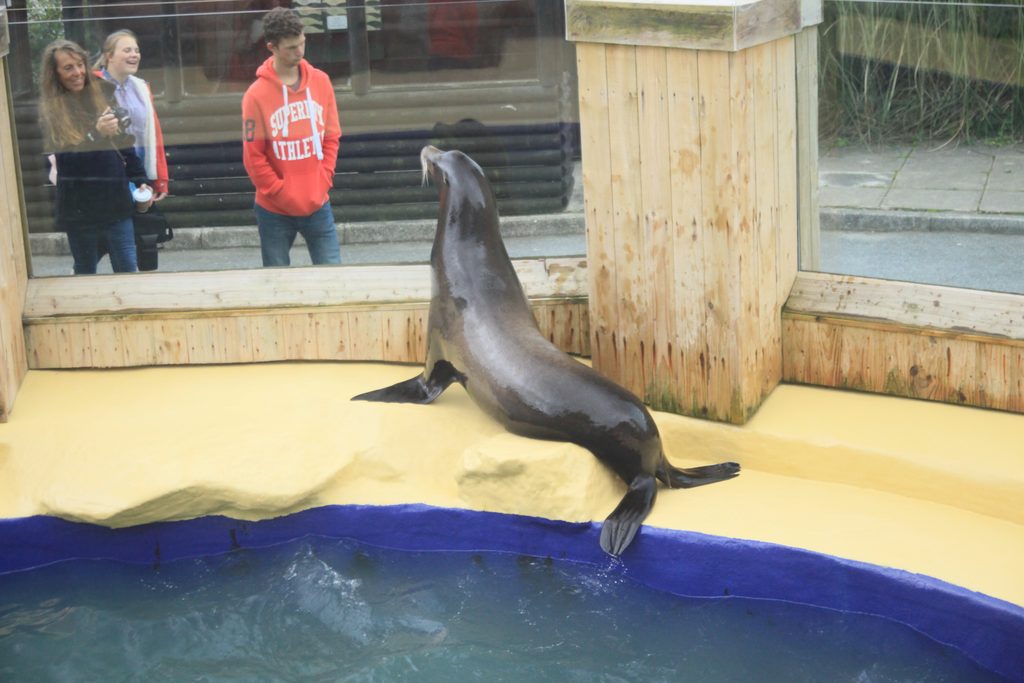
Gweek – Look at Me Looking at You
At the head of the Helford River lies the small village of Gweek, best known to many visitors as the home of the Cornish Seal Sanctuary. Here rescued seals and other marine animals are cared for and rehabilitated, although sometimes it is difficult to decide exactly who is watching whom.
Helford – Thatched Cottages by the River
Tucked away beside the Helford River, the village of Helford is a delightful collection of narrow lanes, whitewashed cottages and traditional thatched roofs. Once closely connected with the river and the sea, it retains the quiet character of an old Cornish waterside village — the sort of place where simply wandering along the lanes is part of the pleasure
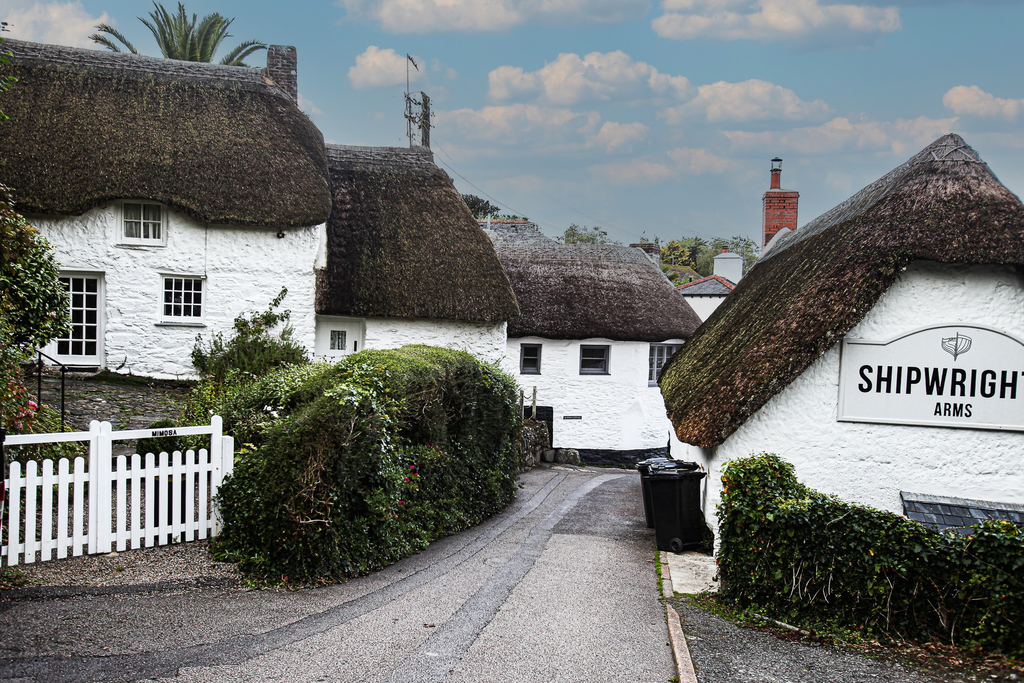
Goonhilly Downs – Cornwall Reaching for the Stars
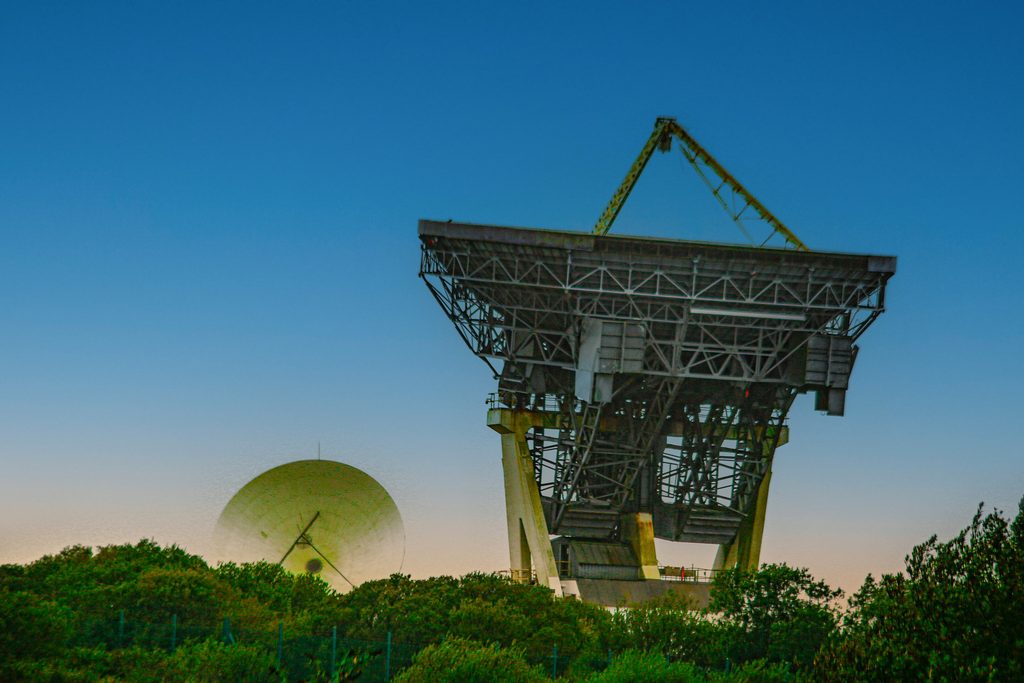
Leaving the quiet lanes and thatched cottages of Helford behind, the landscape changes dramatically at Goonhilly Downs. Rising above the heathland are the giant satellite dishes of Goonhilly Earth Station, an extraordinary reminder of Cornwall’s part in the story of global communications — and, as we discovered earlier on the River Fowey, the prospect of Cornwall joining the space age even provided the locals with an excuse to fire a few rockets of their own!
Cadgwith Cove – A Working Cornish Fishing Village
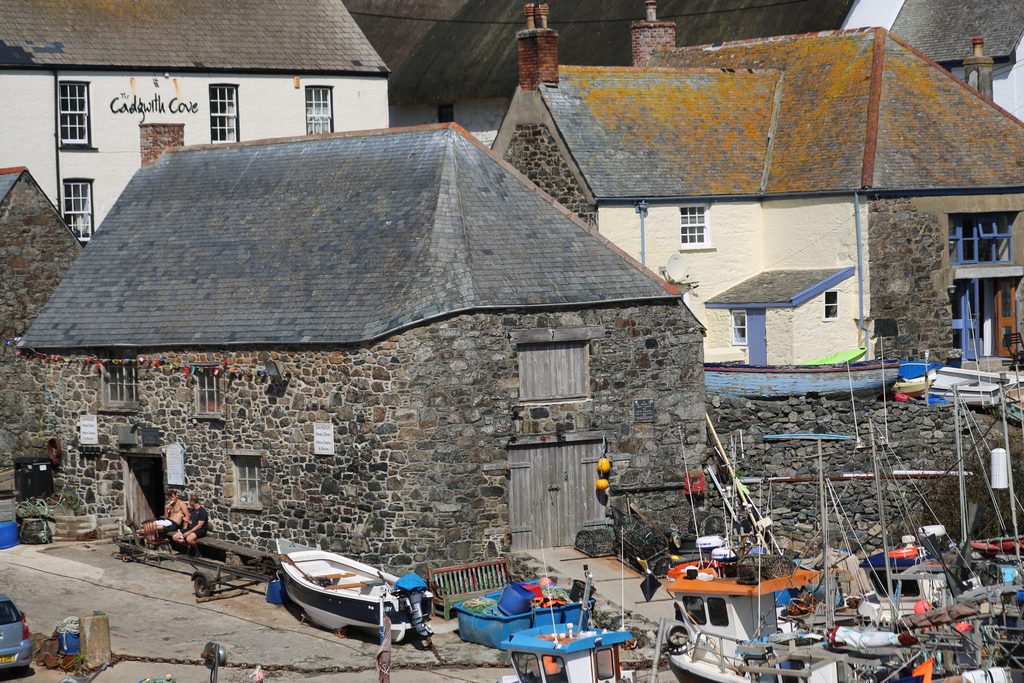
Tucked into a sheltered cove on the Lizard Peninsula, Cadgwith has retained much of the character of a traditional Cornish fishing village. Colourful working boats are still hauled onto the beach beside old stone buildings and thatched cottages, while narrow lanes wind between homes, local businesses and a number of holiday lets. Despite its popularity with visitors, fishing remains very much part of everyday life here.
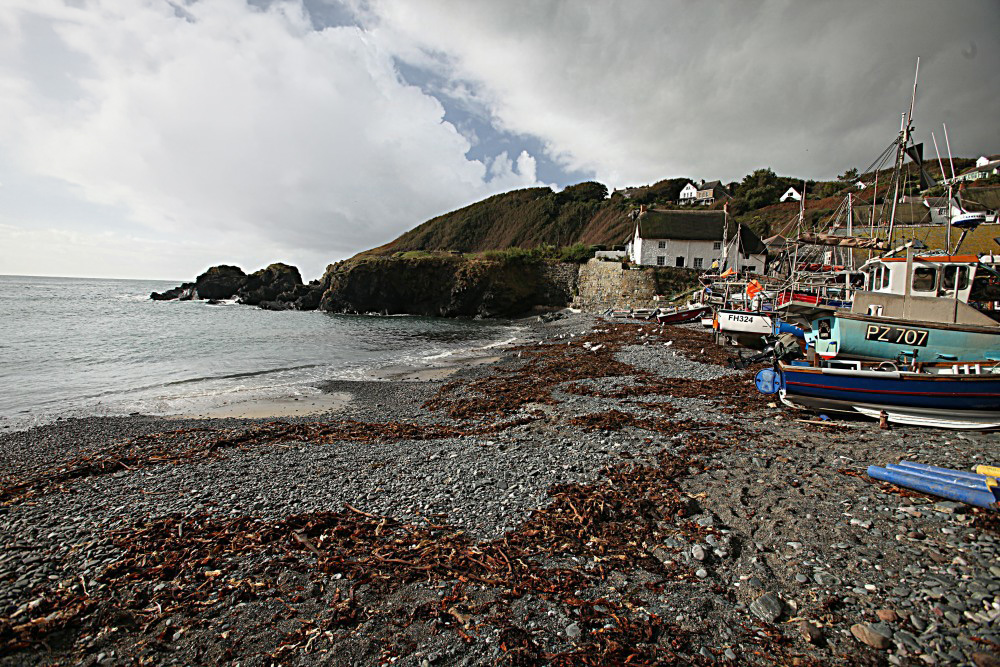
Cadgwith’s small harbour remains very much a working place. Fishing boats, lobster pots and equipment crowd around the old stone buildings, creating the wonderfully untidy mixture of activity and tradition that gives the cove so much of its character.
/
Lizard Point – Where Britain Reaches South
At the southern tip of the Lizard Peninsula, Lizard Point marks the southernmost point of mainland Great Britain. Here the landscape opens onto the Atlantic, with rugged cliffs, rocky coves and an exposed coastline shaped by the sea. It feels an appropriate destination after our journey through the quieter villages and fishing coves of southern Cornwall.
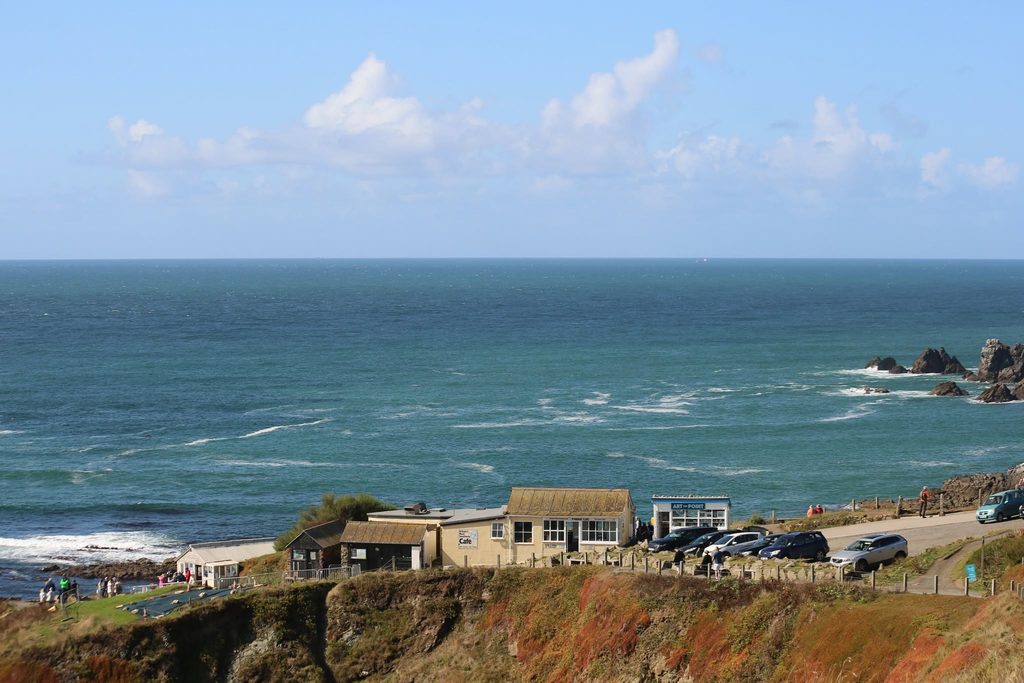
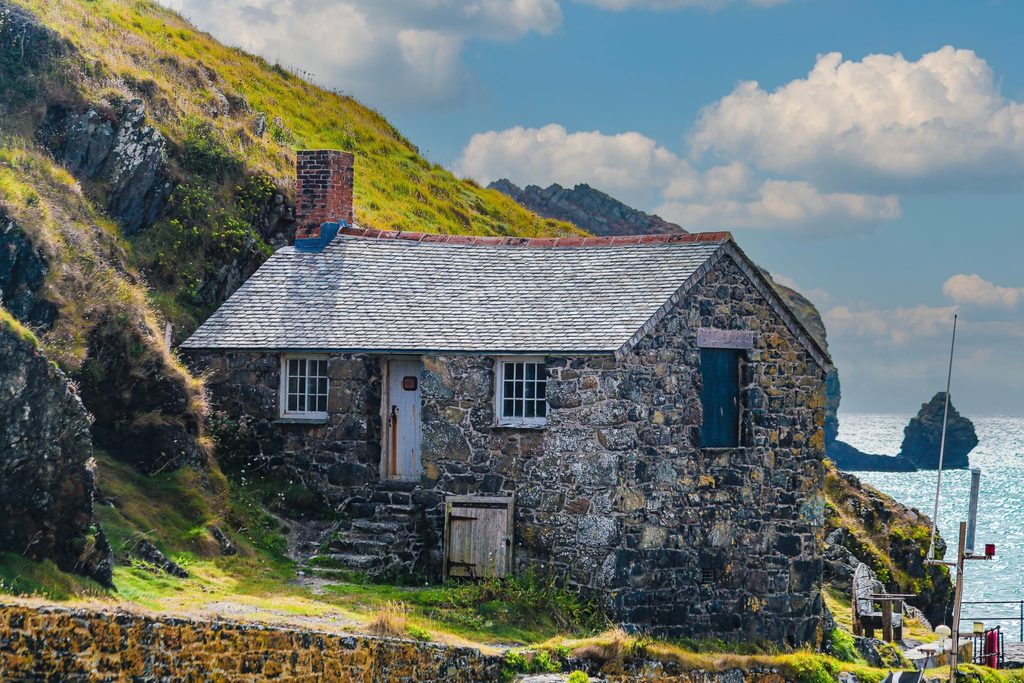
For generations this exposed stretch of coastline has demanded great respect from those who sail around it. Lifeboat crews played an important part in protecting mariners here, and reminders of that history can still be found around the Point. The old stone buildings set against the cliffs provide a striking link between the people who worked here and the powerful sea beyond.
Standing above this hazardous coastline is Lizard Lighthouse, an unmistakable landmark for ships passing Britain’s southernmost point. Its brilliant white tower has guided vessels through these waters for generations and provides a fitting final sight before our road trip turns away from the Lizard Peninsula.
Kynance Cove – A Rugged Cornish Coast
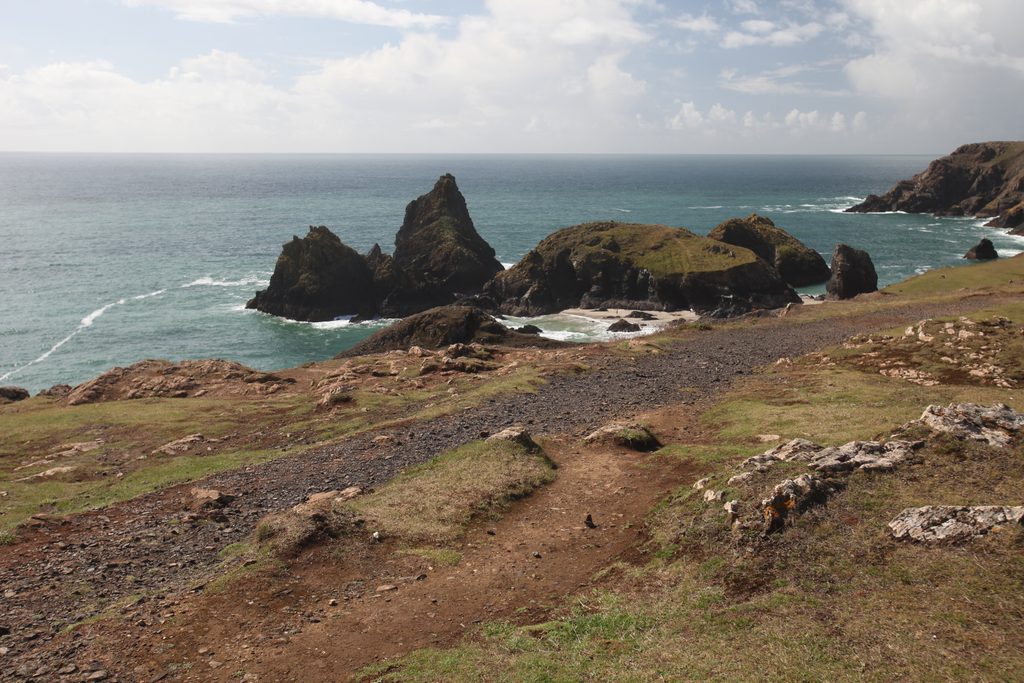
Leaving the Lizard, the road takes us towards Kynance Cove, where the character of this coastline becomes immediately apparent. Jagged rocks rise from the sea beneath steep, rugged cliffs, creating one of Cornwall’s most distinctive coastal landscapes.
Poldhu Cove – More Than a Quiet Beach
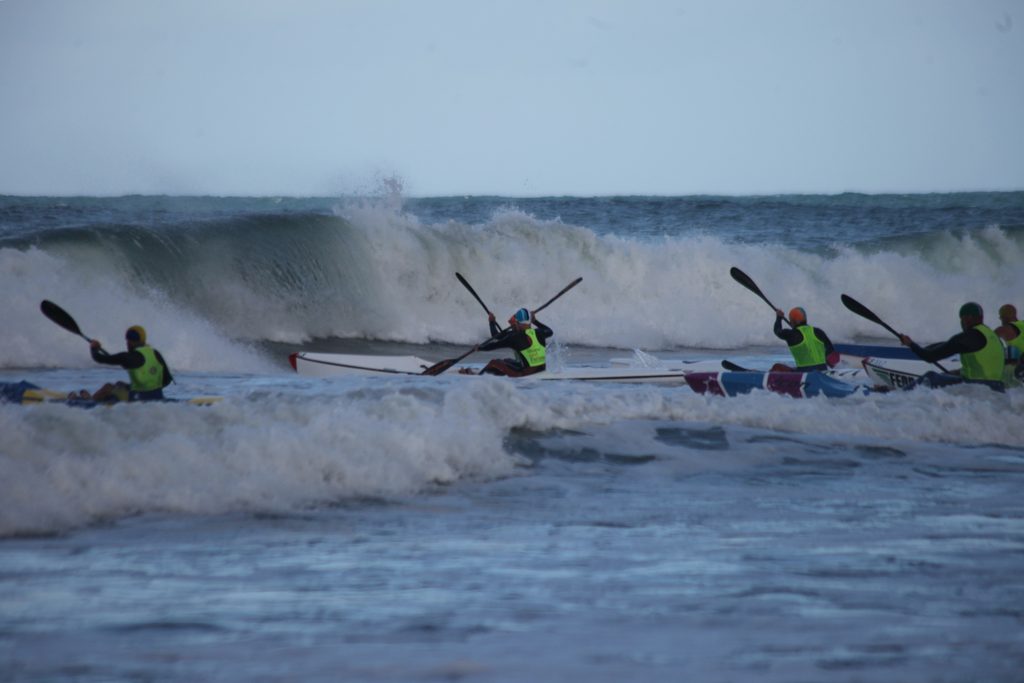
Poldhu Cove may appear to be another peaceful Cornish beach, but on certain days it takes on a very different character. The open Atlantic provides the setting for demanding sea-sport competitions, bringing competitors and brightly coloured craft onto the sand.
Porthleven – A Harbour Built Against the Atlantic
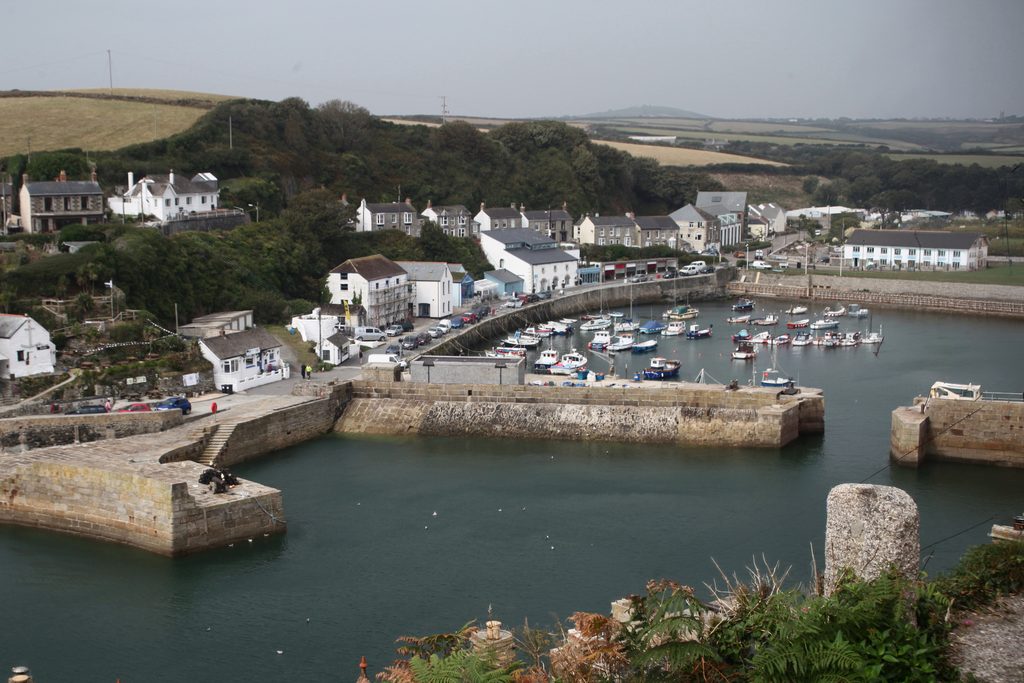
Porthleven grew around its impressive harbour, protected by massive stone walls from a coastline exposed to the full force of the Atlantic. From above, the harbour’s design becomes particularly clear, with the sheltered inner waters and town gathered closely behind its defences.
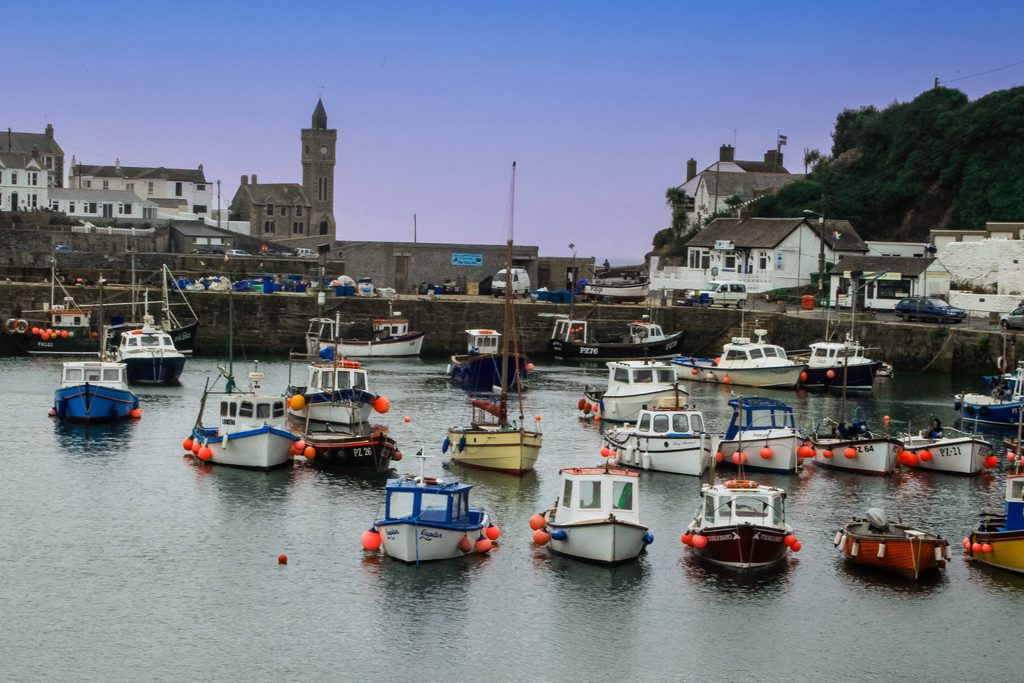
Inside those walls the character changes completely. Fishing boats and small craft fill the sheltered harbour, while Porthleven’s familiar clock tower rises above the waterfront — a scene that still retains much of the character of a traditional Cornish harbour.
Praa Sands – A Sweep of Cornish Sand
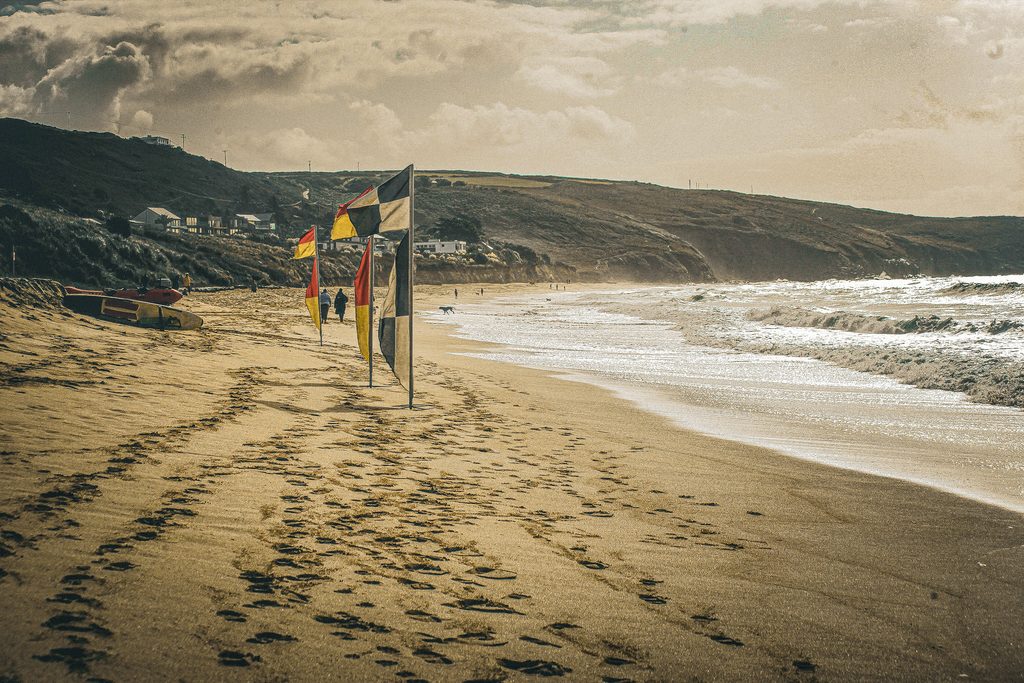
Leaving the harbour behind, the journey reaches the long sandy beach at Praa Sands. Here the coastline opens out, with a broad sweep of sand, rolling Atlantic surf and low cliffs stretching along the bay.
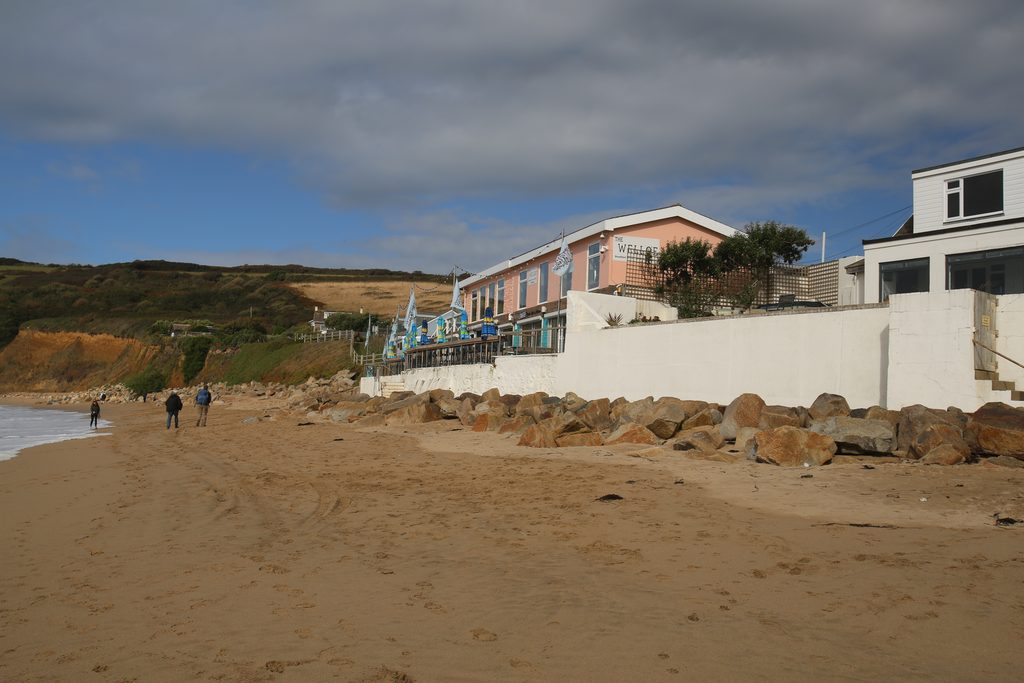
The beach may be the attraction, but Praa Sands is also very much a place to stop rather than simply admire from the road. Cafés and facilities sit close to the sand, making this an easy break before we continue west towards one of Cornwall’s most recognisable landmarks.
St Michael’s Mount – Across the Causeway
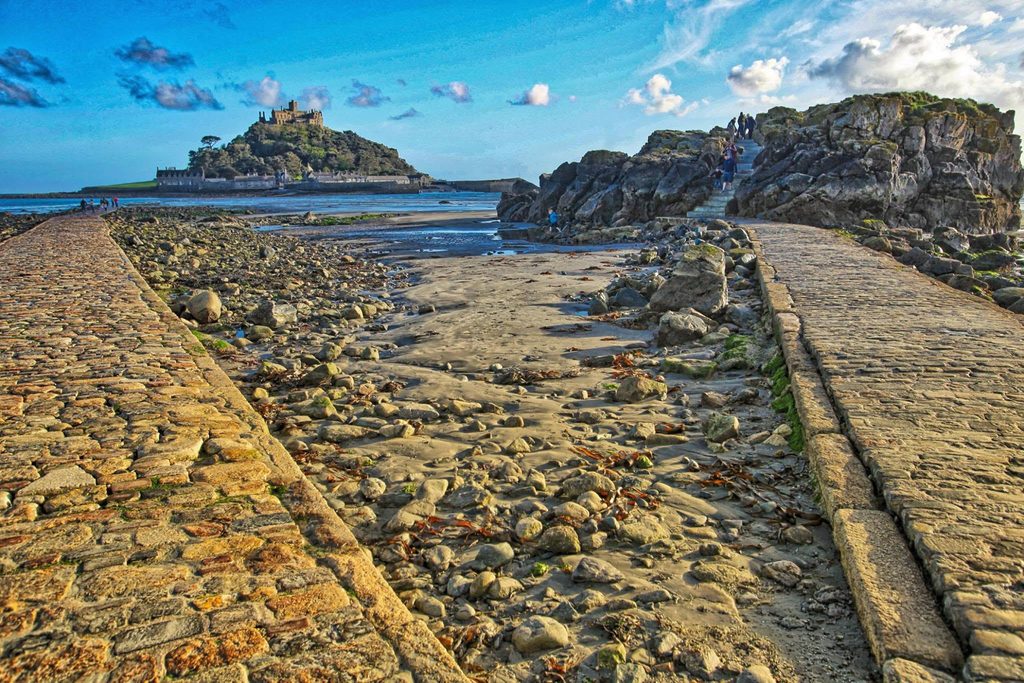
Rising from Mount’s Bay just offshore from Marazion, St Michael’s Mount is one of Cornwall’s most distinctive landmarks. At low tide the ancient stone causeway emerges from the sea, allowing visitors to make the remarkable walk across to the island.
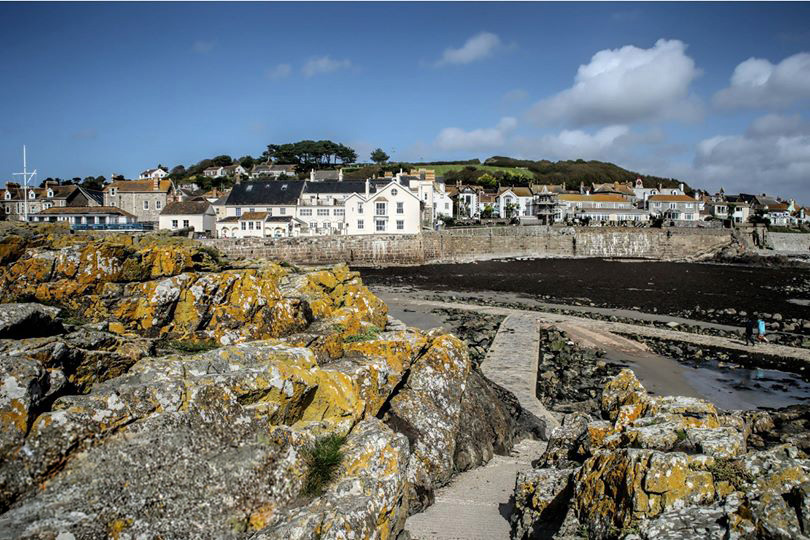
Looking back towards Marazion
But there is another little diversion here. Instead of following the causeway towards the Mount, a second stone path leads onto the rocky outcrop alongside it. Climb onto the rocks and turn around, and there is a completely different view — back towards the seafront and houses of Marazion.
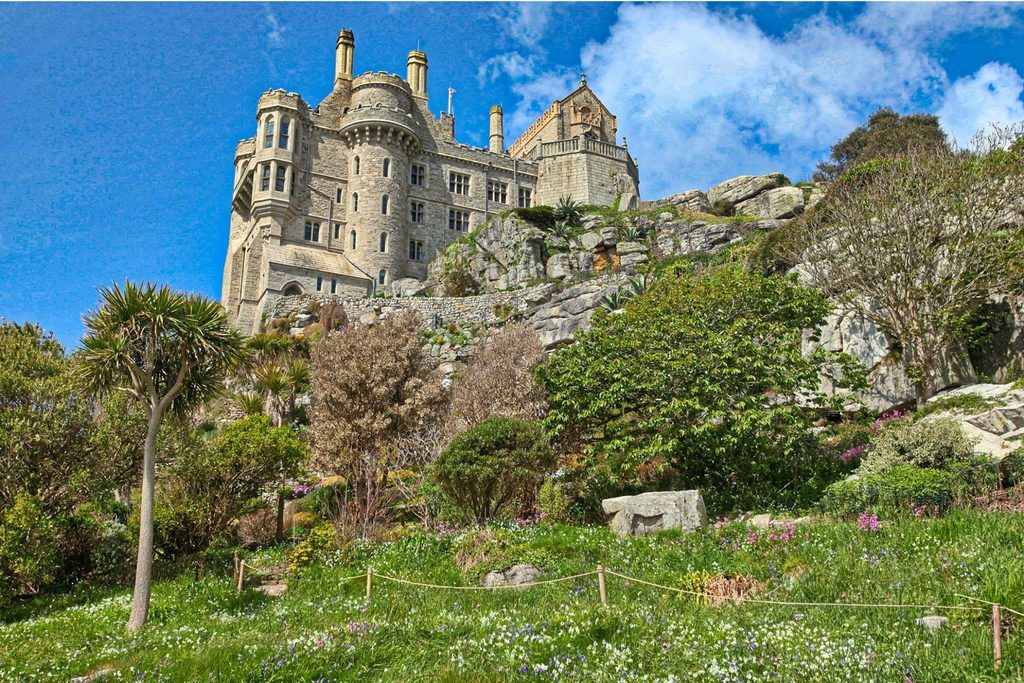
St Michael’s Mount – Castle Above the Sea
Once across the causeway, the character of the Mount changes completely. Paths climb through gardens sheltered by the rocky slopes towards the castle above, where centuries of history overlook Mount’s Bay.
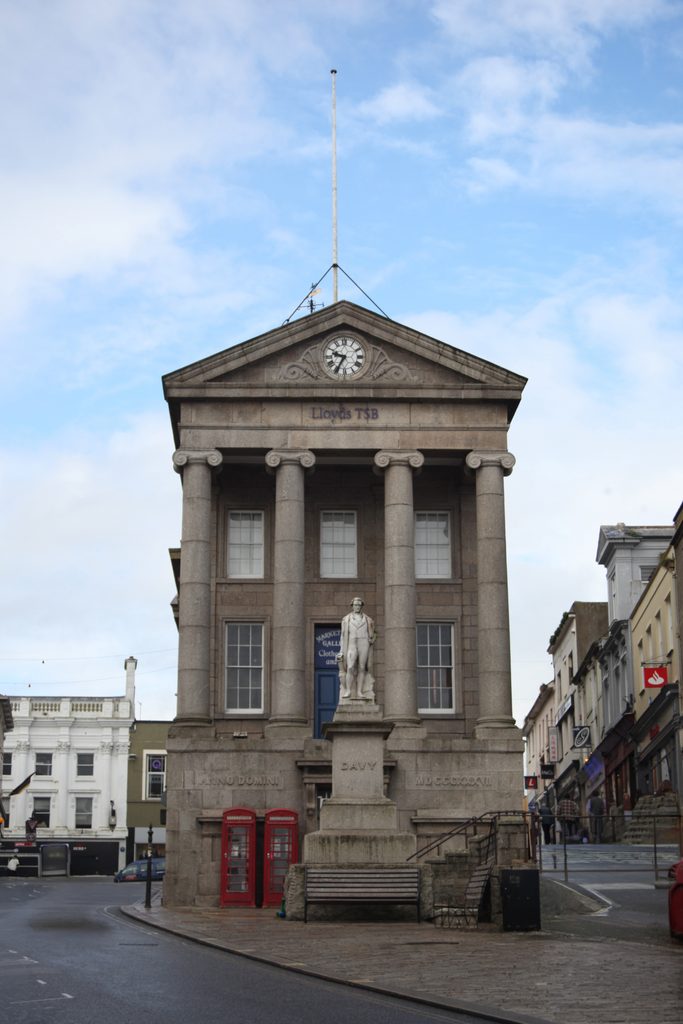
Penzance – A Town at the Heart of Mount’s Bay
Penzance has long been an important centre for West Cornwall, combining the character of an old market town with its close connection to the sea. At its heart stands the imposing Market House, with a statue of Penzance-born scientist and inventor Sir Humphry Davy standing prominently in front.
A Working Connection with the Sea
Penzance has always looked towards the sea. Its harbour remains part of the town’s maritime character, with fishing and commercial vessels sharing the waters of Mount’s Bay with pleasure craft and the regular traffic travelling along this busy stretch of the Cornish coast
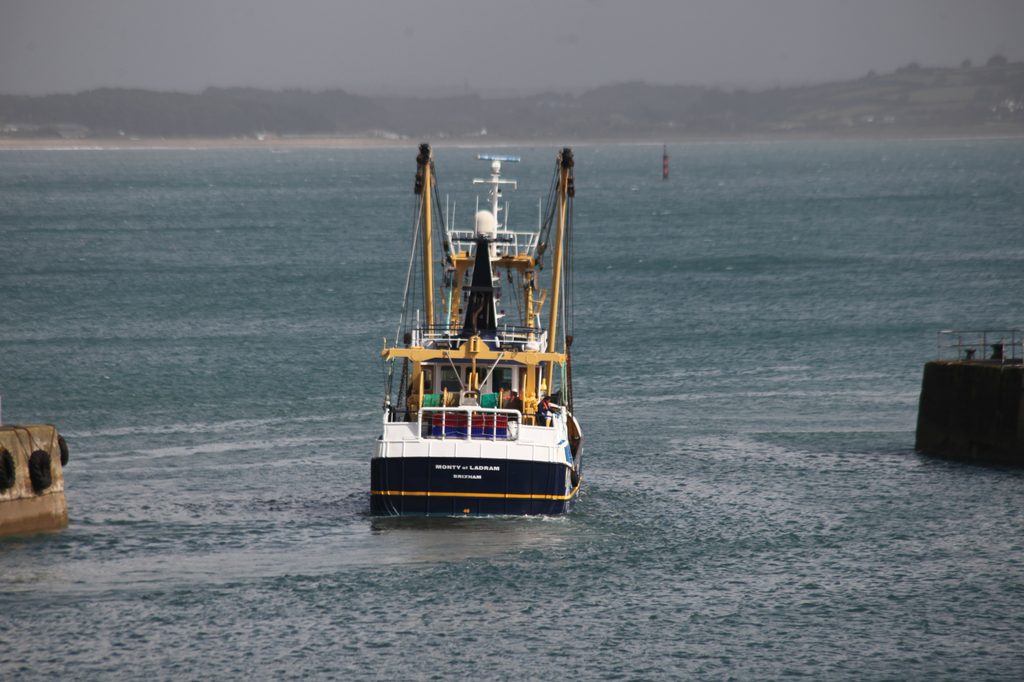
From Apprentice to Famous Scientist
Before becoming one of Britain’s best-known scientists, Humphry Davy began his working life much more modestly. As a young man he was apprenticed to a Penzance surgeon and apothecary, an early step on the remarkable journey that would eventually make his name known around the world.
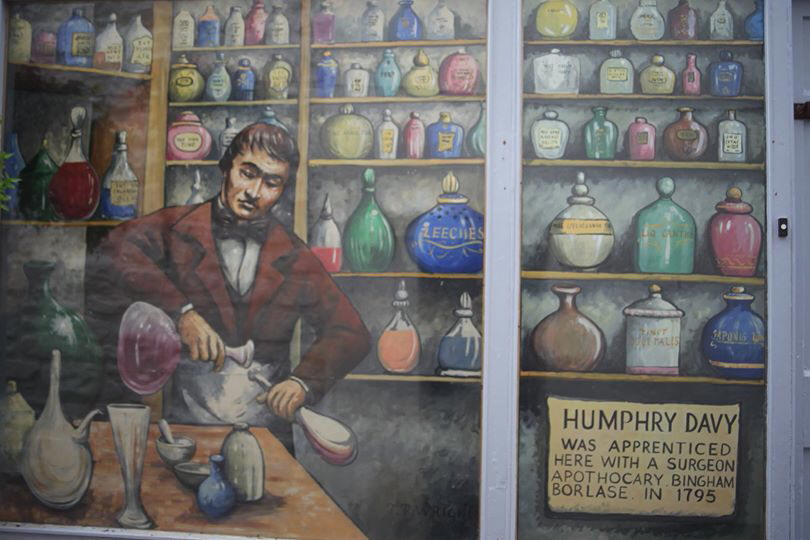
Newlyn – A Harbour That Still Works
Newlyn is not simply a picturesque Cornish harbour. Fishing remains at the heart of the town, and the boats crowded around its quays are a reminder that this is still very much a working port. Behind them, houses climb the hillside, creating that distinctive mixture of harbour, industry and community that gives Newlyn its character.
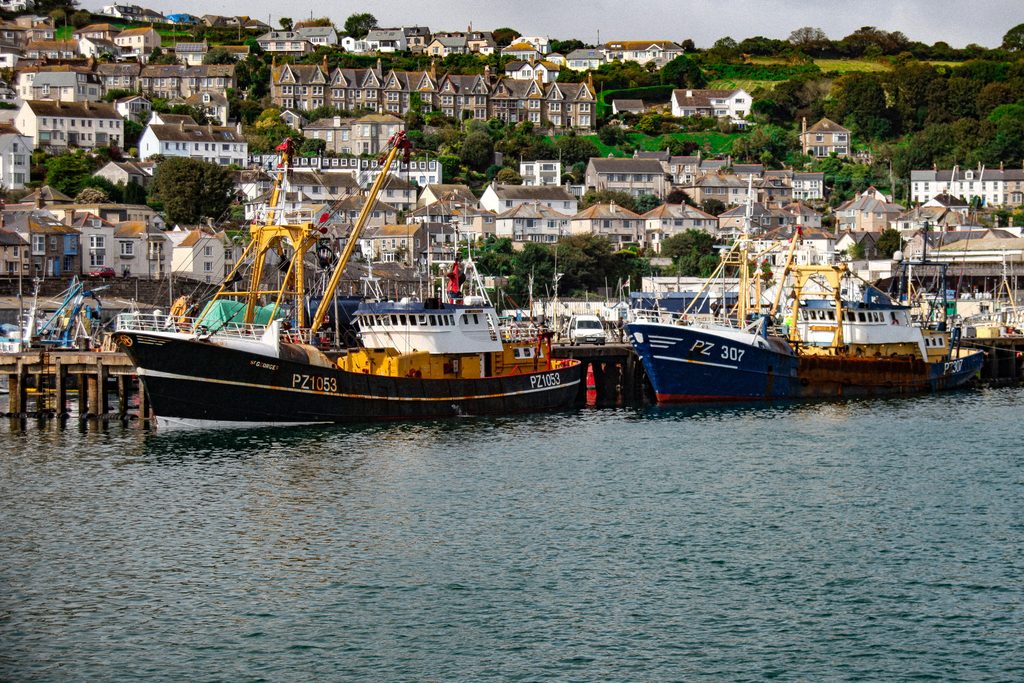
At the Heart of the Fishing Fleet
A closer look across Newlyn Harbour reveals just how much activity is concentrated within its sheltered waters. Fishing vessels of different sizes lie alongside smaller boats and harbour craft, surrounded by the masts, cranes and equipment of a working fleet. This is not a harbour preserved simply for visitors — the sea continues to provide livelihoods here, just as it has for generations.
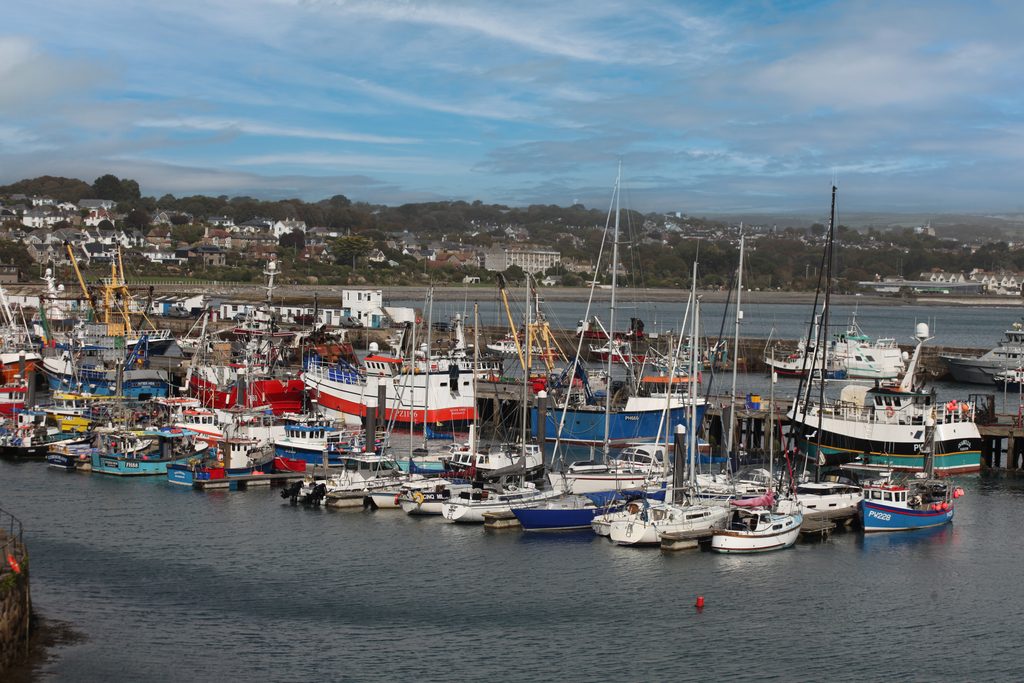
Mousehole – A Harbour Made for Artists
Tucked around a small stone harbour on the western shore of Mount’s Bay, Mousehole has the sort of character that seems unmistakably Cornish. Narrow streets, granite cottages and small boats crowd around the water, while almost every turn seems to offer another view worth stopping for.
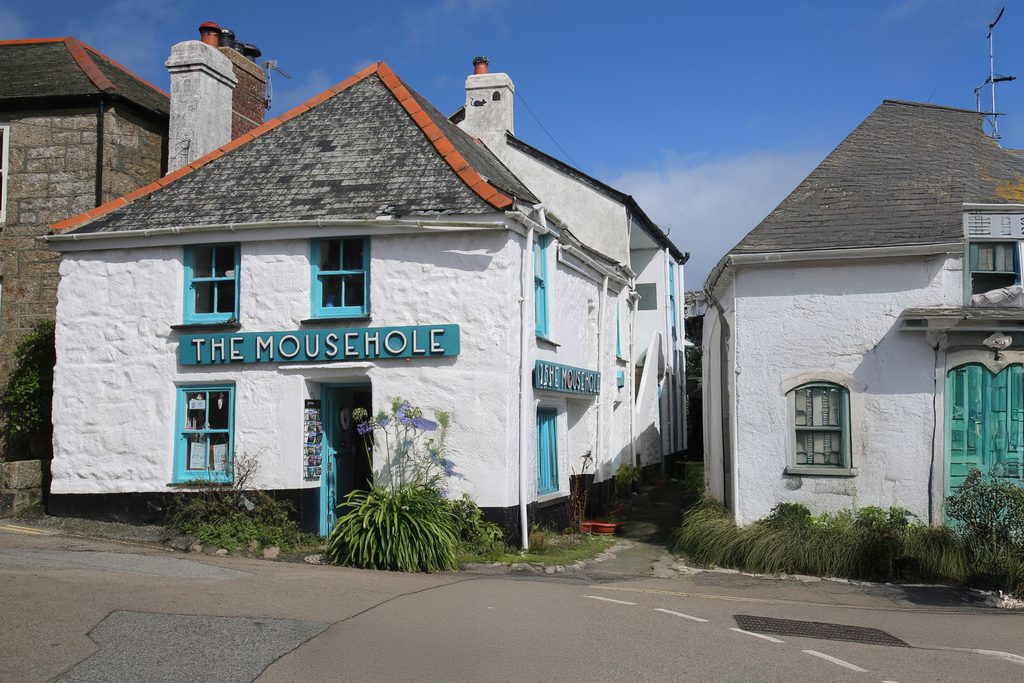
At the Heart of Mousehole
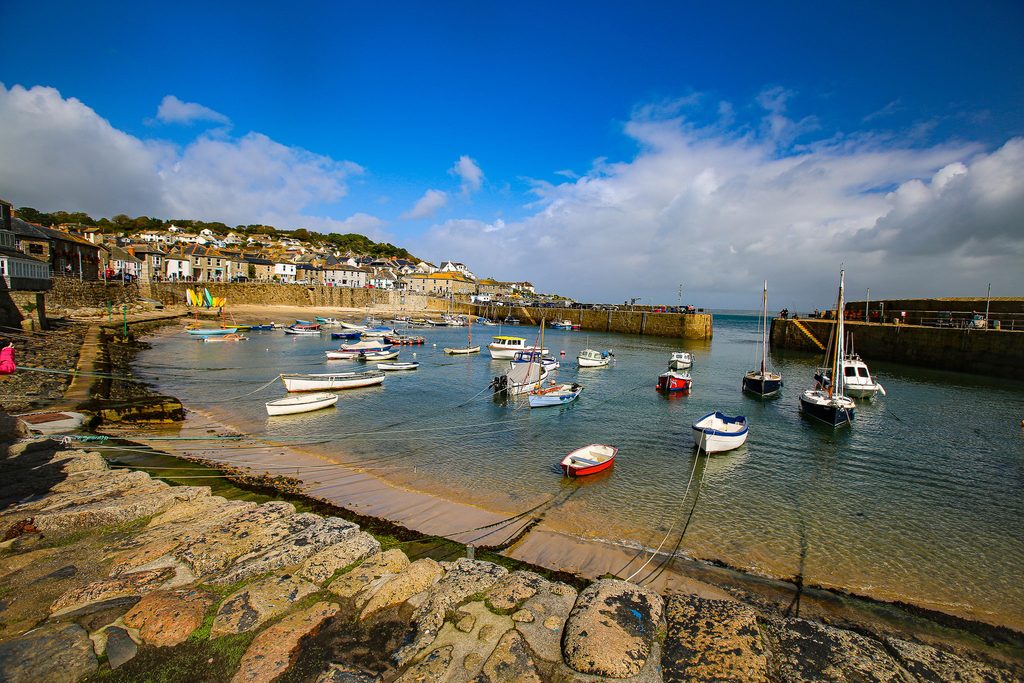
The harbour is the centre of village life, sheltered behind substantial stone walls from the waters of Mount’s Bay. Small fishing boats and pleasure craft fill the protected water, while cottages climb the hillside behind, creating one of Cornwall’s most recognisable harbour scenes.
Across the Bay to St Michael’s Mount
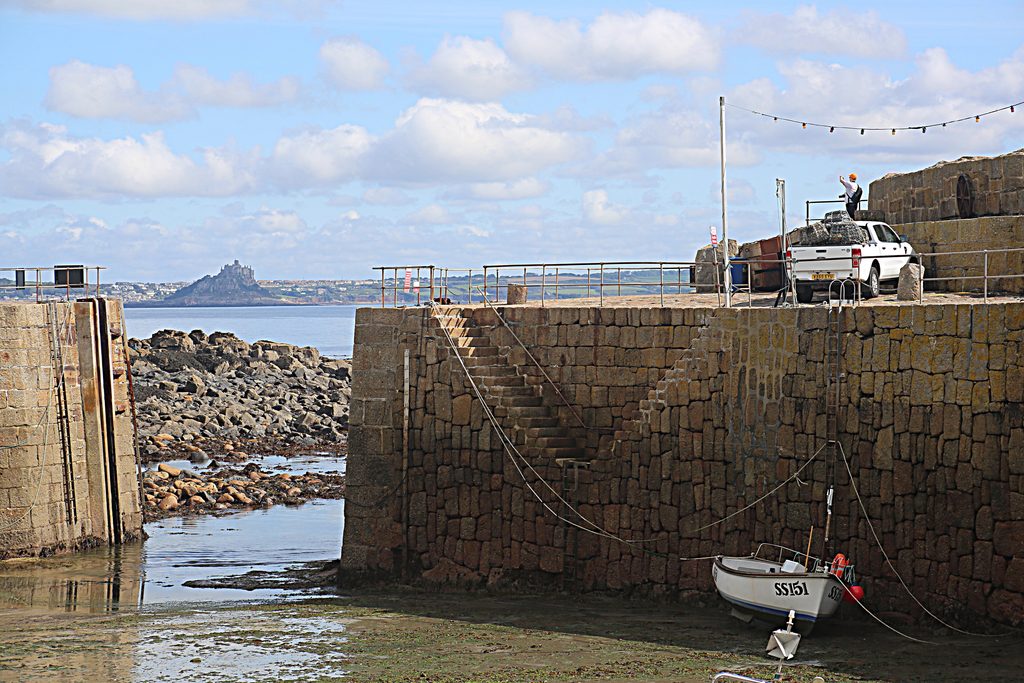
Even from inside Mousehole harbour, the wider Cornish landscape is never far away. Through the gap between the massive stone harbour walls, St Michael’s Mount can be picked out across Mount’s Bay—a distant landmark linking this small fishing village with an earlier stage of our journey
The Merry Maidens – A Circle in the Cornish Landscape
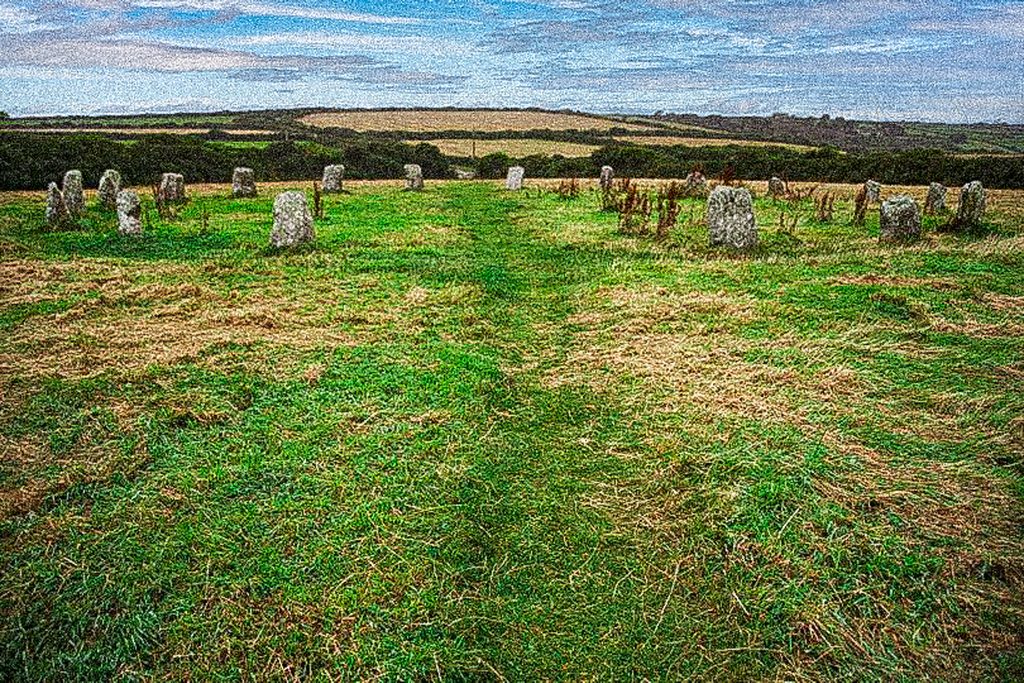
Not far from St Buryan stands the Merry Maidens, a prehistoric stone circle set quietly among the fields of West Cornwall. Far smaller and less imposing than Stonehenge, its stones form an almost complete circle and have survived for thousands of years in this open agricultural landscape.
Minack Theatre – A Stage Above the Sea
Carved into the cliffs above the Atlantic, the Minack Theatre must be one of Britain’s most remarkable places to watch a performance. Its terraces descend towards a stage seemingly suspended between the granite cliffs and the sea, with the Cornish coastline providing a backdrop that no theatre designer could hope to reproduce.
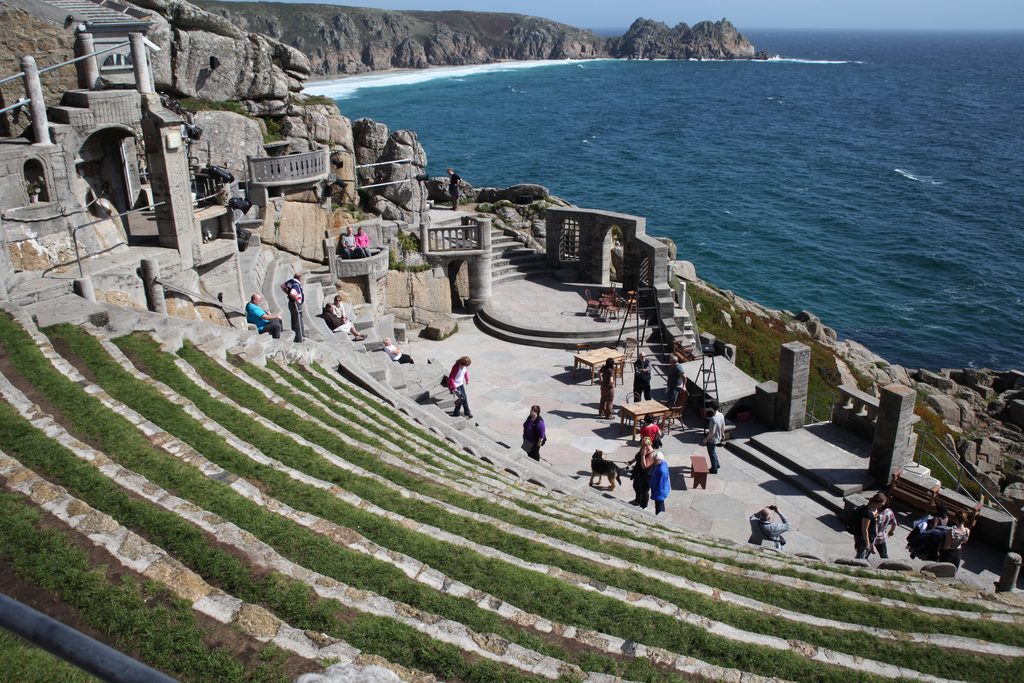
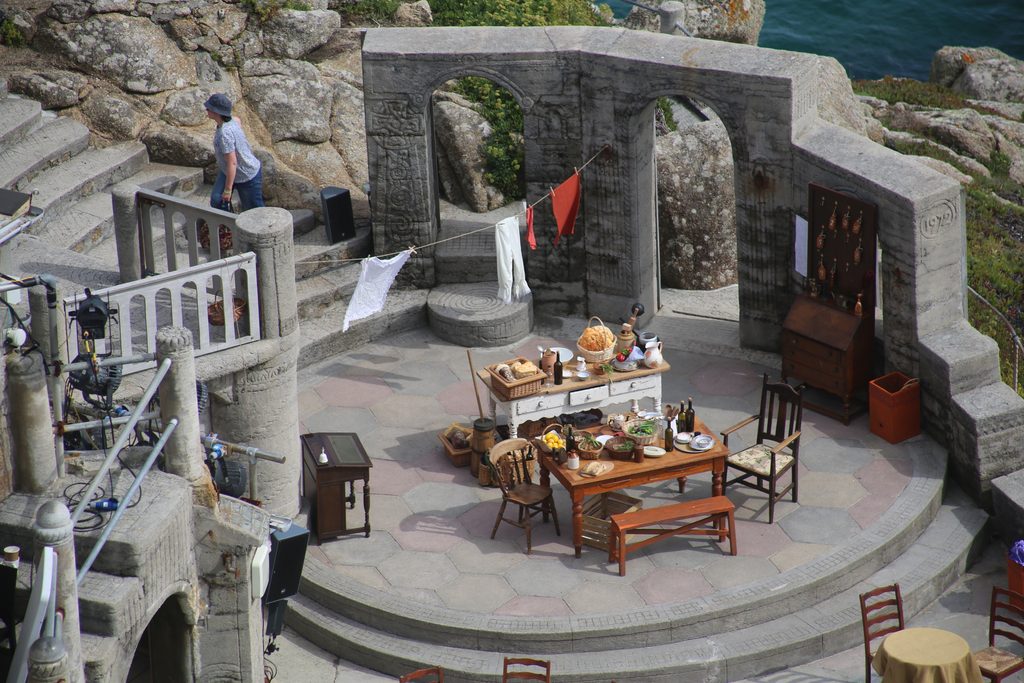
Look more closely and the Minack reveals itself as a working theatre rather than simply a spectacular visitor attraction. Sets and props transform the small stage for each production, while the surrounding granite and Atlantic Ocean remain permanent parts of the scenery.
Porthcurno – From Clifftop to Beach
From the Minack Theatre it is only a short journey down to Porthcurno, where pale sand, turquoise water and towering granite cliffs create one of Cornwall’s most striking little bays. Look carefully towards the top of the cliffs and there is still a glimpse of where we have just been.
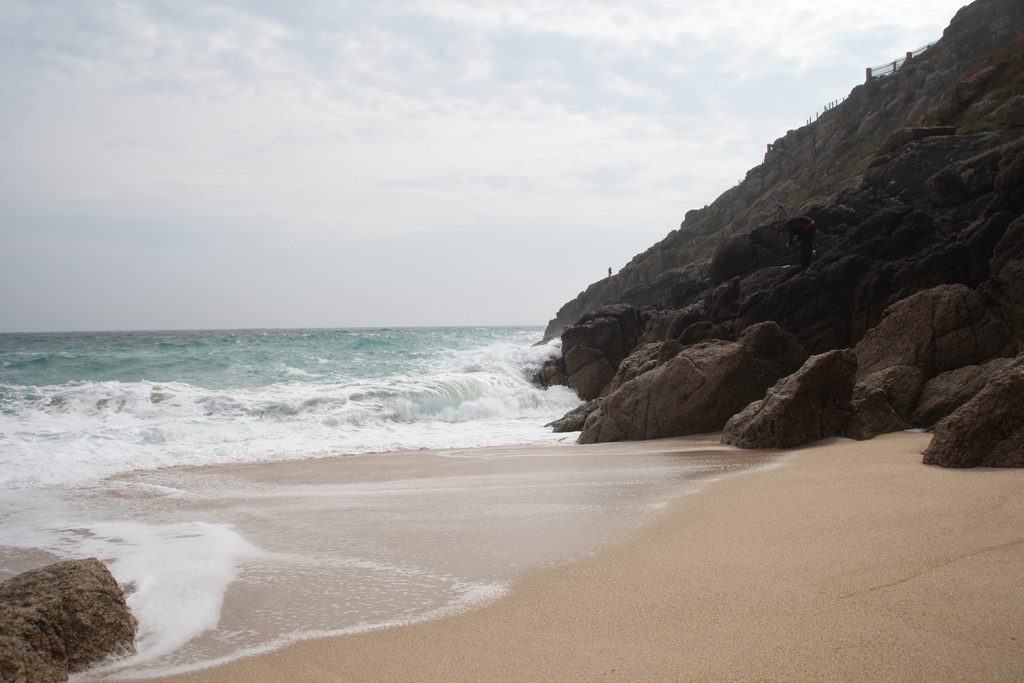
Porthcurno can change character remarkably quickly with the weather and the Atlantic swell. On a calmer day its clear water and sheltered sweep of sand can look almost Mediterranean, although the rugged granite surrounding the bay leaves little doubt that this is Cornwall.